Saturday, January 12, 2013

Surname Saturday ~ Tufts of Charlestown and Malden, Massachusetts


TUFTS

My first and only Tufts ancestor is Mary Tufts, the daughter of Peter and Frances Tufts, born in England about 1613.  She married George Fowle in England, about 1634, had one son, and then came to America.  She lived first in Concord, Massachusetts (where she had five children), and then in Charlestown (where she had five more children!).

It is interesting that Mary’s sister, Elizabeth, and brother, Peter Tufts, all came to America, too, and lived in Malden, Massachusetts next door to Charlestown.   Peter Tufts  (1616 – 1700) married Mary Pierce in 1647 in Charlestown, and had five children.  Sister Elizabeth Tufts (about 1619 – 1693) married Thomas Lynde in Charlestown in 1646. 

Tufts University http://www.tufts.edu/ is located in both Medford and Somerville, Massachusetts, across the Mystic River from Charlestown and Malden.   The founders were Universalists, and 20 acres of land were donated by Charles Tufts in 1852 on top of Walnut Hill, the highest point in Medford.  He also made a second  donation of another 80 acres later in his life.  In 1892 the trustees voted to admit both men and women.  P. T. Barnum was an early benefactor, and he started a Natural History Museum on campus with his animal specimens, including Jumbo the elephant, who is the college mascot.

Charles Tufts (1781 – 1876), the college benefactor, is the 3x great grandson of Peter Tufts and Mary Pierce of Malden, Massachusetts.   He would be my fourth cousin, five generations removed.  He made his fortune in brickmaking, and inherited most of his land.   He is buried at Mount Auburn Cemetery.    

You can read about the Tufts family at Thomas W. Tuft’s blog “Tufts Family Genealogy” at the link http://tuftsgenealogy.blogspot.com/   There is a book called Tufts Kinsmen: A Recapitulation of the Geonealogy of All Known Persons of the Tufts Surname, by Herbert Freeman Adams, 1992, as well as many papers published by the Tufts Kinsman Association at the NEHGS library.  You can also read a story of the family at the book Sex in Middlesex, by Roger Thompson, University of Massachusetts Press, 1986, pages 45 – 53. 

-----------------------

Generation 1: Mary Tufts, daughter of Peter Tufts and Frances Unknown, born about 1613 probably in Wilby, Norfolk, England, died 15 February 1676 in Charlestown, Massachusetts; married about 1634 in England to George Fowle, son of George Fowle and Ann Draper.  He was born on 27 January 1610 in Sandhurst, Kent, England, and died on 19 September 1682 in Charlestown, Massachusetts. Eleven children.

Generation 2:  Lt. James Fowle m. Abigail Carter
Generation 3:  Capt. James Fowle m. Mary Richardson
Generation 4: Mary Fowle m. James Simonds
Generation 5: Caleb Simonds m. Susanna Converse
Generation 6:  Ruth Simonds m. Andrew Munroe
Generation 7:  Luther Simonds Munroe m. Olive Flint
Generation 8: Phebe Cross Munroe m. Robert Wilson Wilkinson
Generation 9: Albert Munroe Wilkinson m. Isabella Lyons Bill
Generation 10: Donald Munroe Wilkinson m. Bertha Louise Roberts (my grandparents)

---------------------------------
Copyright 2013, Heather Wilkinson Rojo

Thursday, January 10, 2013

She lived “between the stairs”: reminiscing about my Grandmother’s stories during the “Downton Abbey” premiere….

For most people, their knowledge of the stratified world of household service in Edwardian England comes from film and TV.  The PBS series “Upstairs Downstairs” introduced the whole idea of the upstairs servants versus the downstairs servants.  “Downton Abbey” confirmed to us that life of the servants downstairs was completely different from the life of the aristocrats upstairs.  Movies like “Mary Poppins” showed us Edwardian England, an era that was completely different from modern life, even though that movie was made only about fifty years after the events supposedly happened.
 
I learned about the usually hidden life of those who were “in service” in Edwardian England long before I saw the mini-series “Upstairs Downstairs”.  My grandmother, Bertha Louise Roberts, was born in Leeds, Yorkshire, England in 1897.  At age 12 she had to go to work.  That means that in 1909 she left school and was placed to work six days a week at the local vicarage.  She had to live there, and was allowed to come home to visit only on Sunday mornings.  Can you imagine sending your child to live that sort of life?  Grammy's stories about her childhood were endlessly fascinating to me when I was a girl. 

Fortunately, she was in training as an under-nurse, and was not a scullery maid.  That means she was a an assistant to a Nanny.  The household in which she worked was huge.  There was an under-nurse, a nanny, and a governess for four boys.  The middle two boys were twins.  There was a large downstairs staff, and also the upstairs servants.   The nursery staff were “between the stairs”.  As the under-nurse,  Bertha had to run all the errands to the kitchen, such as getting the food, scuttling the coal and cleaning the children’s silver service.

Apparently there was a dispute between the kitchen staff and the upstairs staff, and Bertha was caught in the middle.  It sounds like a story line for TV, doesn't it?  But it was miserable for a twelve year old girl.  Luckily, my uncle was interested in genealogy and he taped his mother reminiscing about her childhood in Leeds.  This tape was made in the 1970s, and she said “The nurse and the cook didn’t get along with each other and it made it difficult for me.  I would go down and chop great big hunks of coal and cook didn't give me the newspapers that I needed for the fire and we didn't have any nice things sent up to us.  We got the food, but we didn't have any cakes or anything nice sent up to us.  I was really very homesick and I would run all the way home and my mother would say “if you’re not happy, Bertha, you don’t have to stay there.”  But I just felt that I had to…”


I have a postcard from Bertha’s sister, Hilda, which she sent to the vicarage.  From this postcard I was able to see that the Holy Trinity vicarage was located at Hyde Terrace, Claredon Road, in Leeds, but there was no house number.   I googled the words “Holy Trinity” Leeds “Hyde Terrace” and found a link to a page on a website called British Listed Buildings http://www.britishlistedbuildings.co.uk/en-465894-38-hyde-terrace-  and according to this page the vicarage was listed at 38 Hyde Terrace.  There is also a great description of the house, and a link to the street view at  https://maps.google.com/.   The Victorian style brick home was built in 1857 and looks like a grand mansion.   It also says that the building is now flats (apartments).   It is located in the current neighborhood of the Leeds University.    From the Google Street view I was able to grab a screen shot for the photograph below. 

38 Hyde Terrace, Leeds, Yorkshire, England from Google Streetview
This was the Holy Trinity Vicarage 100 years ago, built in 1857
I could also see from the Google maps application that Hyde Terrace was about one mile from where Bertha's family lived.  Her street, Northwest View, no longer exists due to urban renewal and the Leeds University expansion.  In her audio tape of her life story, her description of life in these slums rivals the scenes in the book Angela's Ashes by Frank McCourt.  Bertha said " I was allowed to go home on Sunday afternoons so I could go to Sunday school and I would have supper with my family and then my father would take me back because the vicarage was in a very isolated part of the city.  And I always had a lot of newspapers and a cake that Mother had made for me.  Then I had half a day once a month that I could go home."

An old photo of the Woodhouse neighborhood of Leeds
This section of the city no longer exists, and it was where Bertha lived as a child
More from Bertha  "There was quite a class distinction over there and the vicar's wife was really very snobbish.  I was just a little servant girl and there was lots of things I couldn't do...  I wasn't allowed to do…... And lots of times they would have parties for the children and some of the children were probably just as old as I was.  But if we played games I had to go outside of the nursery and then go back in again.  I had to be the last one to go in.  It gave me sort of an inferiority complex but finally I had big rosy cheeks and the nurse was very nice to me.  But after she left I wasn't too happy there so I came home again."

Every time I watch "Downton Abbey" or read a historical novel about life in upper crust households in Edwardian England, I think about my grandmother.  The nicest thing about "Downton Abbey" is that some of the downstairs staff in the show use the same Yorkshire accent as my grandmother.  It really is nice to hear that again!  I would love to find some non-fiction books or documentaries about the life of servants in England during this time period.  Relying on fictional television and movies for information is not very authentic research, is it?  But it certainly is fun! 

I previously blogged about Bertha’s audio tape, and you can read the part about her life at the vicarage at this link: http://nutfieldgenealogy.blogspot.com/2010/04/amanuensis-monday-berthas-audio-tape_26.html   It was a six part series to transcribe the entire tape, and if you are truly interested in her early life in the slums of Leeds and her 1915 immigration to America you might want to read all six blog posts.

-------------------------------------
Genealogy tidbit about Bertha Louise Roberts (my grandmother):

My great grandfather was John Peter Bowden Roberts, born August 1865 in Leeds, Yorkshire, England, and died 23 August 1925 in Beverly, Massachusetts; married on 24 May 1890 at St. Clement's church, in Sheepscar, Leeds to Emma Frances Warren, daughter of Obed Thomas Warren and Betsey Hannah Stimson.  She was born about 1870 in Peterborough, Northampton, England and died in August 1925 in Beverly, Massachusetts.  Four children:

1.)  Hilda Mary Roberts, born 14 May 1891 in Leeds, died 1 July 1990 in Marlborough, Massachusetts; married in 1914 in Leeds to her first cousin, Herbert Pogson.  Four children born in Massachusetts

2)  Horace Warren Roberts, born 5 September 1895 in Leeds, died 2 November 1969 in Beverly; married on 20 June 1920 to Katherine Bella MacDermid.  Three children born in Beverly, Massachusetts.

3.) Bertha Louise Roberts, my grandmother, born 30 September 1897 in Leeds, died 17 March 1990 in Long Beach, California; married on 26 November 1926 in Beverly to Donald Munroe Wilkinson.   Three sons born in Beverly, Massachusetts.

4.) Infant son, born before 1900 in Leeds, died young.

----------------------

To cite/link to this blog post: Heather Wilkinson Rojo, "She lived “between the stairs”: reminiscing about my Grandmother’s stories during the “Downton Abbey” premiere….", Nutfield Genealogy, posted October 1, 2013, ( https://nutfieldgenealogy.blogspot.com/2013/01/she-lived-between-stairs-reminiscing.html: accessed [access date]). 

Wednesday, January 9, 2013

Weathervane Wednesday ~ A golden Lobster


I've been photographing the weather vanes in the historic area of Nutfield, New Hampshire. Some are historic, others are just whimsical, but all are interesting! Nutfield used to be where Derry and Londonderry are located today, but also covered Windham and parts of Hudson and Manchester, New Hampshire. Today's weathervane is in Boston.

Do you know the location of weathervane #77?   Scroll down to see the answer.


This golden lobster is located on top of the James Hook Lobster Company in Boston.   This famous landmark is located on Boston's waterfront, next to the old Atlantic Avenue bridge.  The James Hook Lobster Company started in 1925, when James Hook and his sons would catch lobsters in Maine and New Brunswick and haul them to Boston for sale to restaurants.  Today they are wholesale distributors and sell over 50,000 pounds of lobster every day. This family business is in its third generation of Hooks. In 2008 New Englanders watched the Hook business burn to the ground on live TV news, but the Hook family proudly rebuilt their lobster company.  This shiny new golden lobster is part of the renewal. You can still walk up and order a lobster or lobster roll right from the window. 

James Hook and Company http://jameshooklobster.com/ 

Click here to view a slide show of the devastating fire at J. Hook http://www.boston.com/news/local/massachusetts/gallery/James_Hook_Lobster_fire/ 

 
To see the entire series of weathervanes, click this link:
http://nutfieldgenealogy.blogspot.com/search/label/Weathervane%20Wednesday

----------------------

Copyright 2013, Heather Wilkinson Rojo

Tuesday, January 8, 2013

Tombstone Tuesday ~ Dr. Phillip Godfrid Kast, Derry, NH

This tombstone was photographed at Forest Hill Cemetery, Derry, New Hampshire


Virtue & silence

ERECTED IN MEMORY OF Dr. PHILLIP
GODRID ~ KAST
He was a gentleman of extensive
aquaintance & his benevolence was no
less Confined.  His hospitality was without
Ostentation - In a word he was a benefactor
to mankind.  In his last sickness hi pain
was xtream which he endured with a 
truly philosophick spirit without y lest
repining almost beyond Example.  He has
Left an inconsolable widow and five Small
Children join'd by the multitude to 
the loss of a tender husband, an indulgent parent, & valuable friend
He departed this life Sept. 6th 17

[the rest of the year was left blank] 

A close up look at the symbols,
a coffin, a shoe, a book, three candles, etc. 

This unusual tombstone is different from most of the engravings at Forest Hill not only because of the odd symbols on top, but for the sentimental wording.  The slate stone was been encased in concrete for preservation by the Derry Masons in the 1920s.  The year of death was not carved into the epitaph, but Dr. Kast died in Londonderry in 1781 after a fall from his horse while visiting a patient.

Phillip Godfrid Kast, son of Dr. Phillip Godfried Kast of Germany and Jane Gowdy, was born about 1743 and died on 6 September 1781.  He was a member of the fraternal order of Masons, and a pharmacist at Salem, Massachusetts. He married Sarah McHard, daughter of Haverhill distiller James McHard,  on 22 January in Haverhill, Massachusetts.  She died 17 May 1835 in Hopkinton, New Hampshire.

For more information on Dr. Phillip Godfrid Kast, see a story by Richard Holmes, the former Derry Town Historian, at this link: http://www.derrynews.com/opinion/x1232766507/Rick-Holmes-A-Loyalists-grave

UPDATE - 9 January 2013

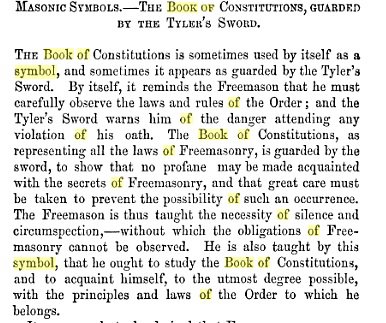
I posted a link to this blog post on Facebook, and several genealogists and historian friends left helpful comments there.  The best was from my friend and fellow member of the Londonderry Historical Society who sent me these three images from the book "Freemasonry, Its Symbolism, Religious Nature and Law of Perfection" by Chalmers Izett Paton, 1873.  Thanks, Penny!  You can find this book at www.archive.org

Three Candles

The Book

The Shoe


------------------------

To Cite/Link to this Blog Post:  Heather Wilkinson Rojo, "Tombstone Tuesday ~ Dr. Phillip Godfrid Kast, Derry, NH", Nutfield Genealogy, posted January 8, 2013, ( https://nutfieldgenealogy.blogspot.com/2013/01/tombstone-tuesday-dr-phillip-godfrid.html: accessed [access date]). 

Monday, January 7, 2013

News from Nutfield


Nutfield Genealogy has another (the fourth!) spin off!  My guest blogger John Tew has started his own blog called Filiopietism Prism.  You can read his first few posts, and his story about his interesting title, at this link: http://filiopietismprism.blogspot.com/   I think you’ll enjoy it!

Another “new to me” distant cousin contacted me just before Christmas, and also had a group of several Salem historians all contact me, too.  They are all descendants of the GARDNERS of Salem, who read my post about Benjamin Gardner.  He is mysterious brickwall ancestor who was a ropemaker in Salem just after the American Revolutionary War.  John Goff, who I knew before as a WYMAN cousin, wrote up a story mentioning Benjamin Gardner for the website “Wicked Local- Salem” http://www.wickedlocal.com/salem , which will appear later in January.  John Goff has a regular column at this website, called “Preservation Perspective”.

Another one of these GARDNER cousins is John Switlik who writes the blog “Thomas Gardner of Salem, MA” at http://thomasgardnerofsalem.blogspot.com/   and he also manages the Thomas Gardner Society website at http://thomasgardnersociety.org/     If you are a GARDNER, or if you have Salem ancestry, you might want to check out these links.

This cairn marked the first sermon by Rev. MacGregor
Where was it located?  It has disappeared since 1919
A geographer named Donald Kirkland is working with Richard Holmes, the Derry town historian, to determine the location of a cairn that marked the site where Rev. MacGregor gave the first sermon in Nutfield (now Derry, somewhere near Beaver Lake).  He read my blog posts on Beaver Lake and sent me this photo which dates from 1919.  Mr. Kirkland was hoping I knew the location of the cairn, or if I had a relative who knew the location. The cairn was somewhere near the northeast side of Beaver Lake.  He has queried seniors and members at the First Parish Church, but no one seems to know the spot.  If you know the location of this former cairn, please contact me (email vrojomit@gmail.com or leave a comment here) and I’ll pass it on to Mr. Kirkland.


A second cousin once removed, who I never knew before, related to my ALLEN lineage has found me via the website www.Genealogywise.com  I hadn’t been on the Genealogywise website in months and almost missed her posting.  Have you tried Genealogywise?  I don’t find it as interesting or useful as Facebook for connecting with other genealogists, but I’m glad I checked back in.  This is a lesson in checking back onto bulletin boards or websites where you may have left messages, because there just might be a return message, or a new post from someone who has potential information for you!

Last week I wrote a post on a Sunday.  I usually never post on Sunday.  However, at Christmas I had receive a very unique gift from my daughter and it was so perfect for family historians that I just had to share.  She had a cutting board made with my mother’s favorite recipe in her OWN HANDWRITING woodburned into the board.  It was made by a crafter at Etsy.com who took a scan of the original recipe card and burned the handwriting.  Think of all the recipes, letters or signatures you have collected that you can share this way.  It was picked up by someone and posted to Pinterest, where it went absolutely viral.  I have had almost 1500 hits to this one post this week, and over 1,000 of the hits came directly from the Pinterest website. I’m so glad I decided to post that whimsical story and photograph.  Isn't that what social media is all about?

Thanksgiving and Christmas have come and gone, and it’s now 2013.  I’ll be attending RootsTech 2013 in Salt Lake City in March and also NERGC in April in Manchester, New Hampshire.  Let’s see what the New Year brings for genealogy mysteries and interesting local history stories…

----------------------------
Copyright 2013, Heather Wilkinson Rojo

Saturday, January 5, 2013

Three Kings Day

 
Every year my family celebrates Three Kings Day.  This is not an old family custom, but it came about when I married a Spaniard, and my cousin married a girl from Mexico.  In both Spain and Mexico, and in other countries of the world, the Three Kings bring the holiday gifts to children, not Santa Claus. This means that the gifts do not arrive until January 6th!

It's been fun to get our New England Yankee family together to celebrate together after the Christmas craziness is all over.  We look forward to it every year, and cousins come from Maine, New Hampshire, Massachusetts and Rhode Island.  I looked through our old family photos and found group pictures of the whole family over the past 25 years.  Here is a sampling!


1991 in Holden, Massachusetts, my nephew was a few days old!
This may be one of our first Three Kings parties. 
2001, San Juan, Puerto Rico at the mall called
Plaza de las Americas,  posing with Kings instead of Santa! 

2002  My Dad and his brother used to
celebrate their New Years birthdays
at our Three Kings party.  Dad died later that year
and Uncle Robert died in 2005.
We used to put the birthday candles
on top of the Kings Cake!

2008, Hope, Rhode Island, snow kept the Maine cousins away

2011, everyone posed for this photo holding goodies
sent from See's Candies in California by our uncle.
He loved the photo! 


Click here for a previous post about Three Kings Day:
lhttp://nutfieldgenealogy.blogspot.com/2009/12/advent-calendar-three-kings-bread.html

--------------------------
Copyright 2012, Heather Wilkinson Rojo

Friday, January 4, 2013

A Statehouse Mystery

The Honorable Henry Wilder Keyes
by Craig Pursley of Bath, New Hampshire


On December 5th, a portrait of New Hampshire Governor Henry Wilder Keyes was hung at the statehouse in Concord.  If you have been to the statehouse in the past, perhaps you are thinking “ Wasn't there already a portrait there of Keyes?”   The statehouse holds over 200 portraits in its halls and rooms, from generals to senators, governors and even an astronaut (Alan B. Shepard of Derry). 

For years there has been a portrait hanging on the second floor labeled as Governor and US Senator Keyes.  Former state representative Dean Dexter (also a former New Hampshire Mayflower Society Governor) was the first to question the authenticity of the portrait since he knew the Keyes family.  In August 2012 a family member wrote the statehouse asking that this portrait be removed since it was not her grandfather.  The first portrait was later identified as Jacob Hart Ela (1820-1884) of Rochester.  It was mislaid for years after being donated to the state library by the Keyes family.  Curators assumed the portrait was of Gov. Keyes when the painting was found with a label identifying the donors, and it was erroneously hung at the statehouse.

After the old portrait was removed, New Hampshire artist Craig Pursley was commissioned to paint a new portrait of Gov. Keyes.  The painting was dedicated and rehung at the statehouse on 5 December 2012 by Dean Dexter, in a ceremony with Governor John Lynch and members of the Keyes family. 

Dean Dexter helps hang the new portrait
at the New Hampshire statehouse
 
newsclipping from the Laconia Citizen 15 December 2012


Henry Wilder Keyes was born 23 May 1862 in Newbury, Vermont and died 19 June 1938 in Haverhill Vermont (the two towns are across the river from each other).  He was a farmer and banker from Haverhill, New Hampshire, where he was a selectman for 25 years.  He was a member of Harvard’s class of 1887.  He was elected Governor from 1916 to 1919, and served as US Senator from 1919 to 1937 (three terms).   He married Frances Parkinson Wheeler in 1904, when he was a 42 year old bachelor.  They had three sons.   Frances and Henry W. Keyes are buried together at the Oxbow Cemetery in Newbury, Vermont.


History of the New Hampshire Statehouse http://www.nh.gov/nhinfo/sthouse.html 

Thank you to Dean Dexter for the photos and the newspaper links to this story! Click here for a link to the same story at Dean's website "New Hampshire Commentary": http://www.nhcommentary.com/Mystery%20Portrait%20in%20NH%20State%20House%20Not%20Governor%20Henry%20W%20Keyes%20--%20By%20Dean%20Dexter.htm

The artist Craig Pursley's website www.pursleyart.com 

 
----------------------------
Copyright 2013, Heather Wilkinson Rojo


Thursday, January 3, 2013

Derry, NH's Famous Potato


New Hampshire State Historical Marker
in front of the First Parish Church, East Derry
mentions the first potato
"They introduced the culture of the potato, which they brought with them from Ireland.  Until their arrival, this valuable vegetable, now regarded as one of the necessaries of life, if not wholly unknown, was not cultivated in New England.  To them belongs the credit of its introduction to general use.  Although highly prized by this company of settlers, it was for a long time but little regarded by their English neighbors: a barrel or two being considered a supply for a family.  But its value as food for man and beast became at length more generally known, and who can now estimate the full advantage of its cultivation to this country!"   from the History of Londonderry


The Potato Shrine in East Derry, in the 1960s
from the book Derry Revisited (see below)
Every school child in Nutfield (now Londonderry, Derry and Windham, New Hampshire) can tell you that in 1719 the Scots Irish settlers planted the first known potatoes in America right here in what is now the town of Derry.  The common planting field was located alongside what is now the Route 28 bypass in Derry.  There was a large wooden sign there in the 1960s marking the spot, but it has long since disintegrated.

Potato souvenir on display at the Derry Museum

In New Hampshire, local history is part of the fourth grade curriculum.  A group of students from the Derry Village school have begun a drive to make the humble potato the New Hampshire state vegetable.  They have enlisted State Representative John O'Connor to bring the bill to Concord.  The students will be learning the legislative process as they follow their suggestion as it passes through the statehouse.  This is a great learning experience for elementary school students!

I also think the story of the potato is interesting.  Just remember that potatoes are a new world vegetable, just like pumpkins and squashes.  The first Spanish explorers brought the first potatoes back to Spain and Europe from South America.  The potato was so popular that it spread all over Europe quickly. Then in 1719 the potato made it to North America.  What a migration story!

The potato migration map
from The Natural History Museum website
http://www.nhm.ac.uk/nature-online/life/plants-fungi/seeds-of-trade/page.dsml?section=crops&page=spread&ref=potato

The potato genealogy:

Between 8000 and 5000 BC South American potatoes originated in Peru and Bolivia

1600s Potatoes brought to Spain when the Inca Empire was conquered

late 1600s and 1700s Potatoes spread all over Europe

1700s and 1800s White potatoes popularized in Ireland, grown almost exclusively over other crops

1719 the first Irish potatoes grown in Nutfield, New Hampshire by Scots Irish settlers

1840s - Potato famine in Ireland caused by Phytophthora infestans and a lack of genetic diversity in the potato crop

1800s - 2000s Eventually potatoes grown all over the United States in many varieties

2012 - Thousands of varieties of potatoes still exist in the Andes, and even more worldwide


For the truly curious:

Derry Revisted, by Richard Holmes and William Dugan, Acadia Publishing, 2005, see the photograph and story of the Potato Shrine on page 27.

The History of Londonderry, by Rev. Edward Lutwyche Parker, 1860, see pages 48 and 49 for the history of the first potato grown in Nutfield.

Nashua Telegraph, Nashua, NH, "Potato shrine here", 14 May 1962, http://news.google.com/newspapers?nid=2209&dat=19620514&id=ubUrAAAAIBAJ&sjid=1v4FAAAAIBAJ&pg=7359,1327539

Concord Monitor, Concord, NH "Derry representative,  fourth graders want potato to be NH state vegetable", 4 December 2012
 http://www.concordmonitor.com/home/3143382-95/state-derry-potato-vegetable

Derry News, Derry, NH, "Local lawmaker wants potato named state vegetable", 20 December 2012,
Local lawmaker wants potato named state vegetable


UPDATE:  Governor Maggie Hassan signed the bill into law on June 4, 2013, and proclaimed the white potato as the State Vegetable of New Hampshire!  http://nutpub.net/nutfield_newspaper/2013/06/13/potato-becomes-state-vegetable-thanks-to-derry-village-students/

-----------------------------

Heather Wilkinson Rojo, "Derry, NH's Famous Potato", Nutfield Genealogy, posted January 3, 2013, ( https://nutfieldgenealogy.blogspot.com/2013/01/derry-nhs-famous-potato.html: accessed [access date]).