Showing posts with label Bradford. Show all posts

Friday, July 29, 2022

Day Five of the "Path of the Pilgrims" Tour by the GSMD

Day One:  https://nutfieldgenealogy.blogspot.com/2022/07/on-path-of-pilgrims-tour-from-general.html  

Day Two:  https://nutfieldgenealogy.blogspot.com/2022/07/day-two-on-path-of-pilgrims-tour-by-gsmd.html  

Day Three:   https://nutfieldgenealogy.blogspot.com/2022/07/day-three-of-path-of-pilgrims-tour-by.html  

Day Four:  https://nutfieldgenealogy.blogspot.com/2022/07/day-four-on-path-of-pilgrims-tour-by.html  

Day Five, our last day of the tour, includes The Massachusetts State Library to view the original Bradford Journal, and the Boston Tea Party Museum: 

The Massachusetts State House, Boston, Massachusetts

This column marks where the
original Beacon stood on top
of Beacon Hill

The Massachusetts State Library

The reference desk inside the state library

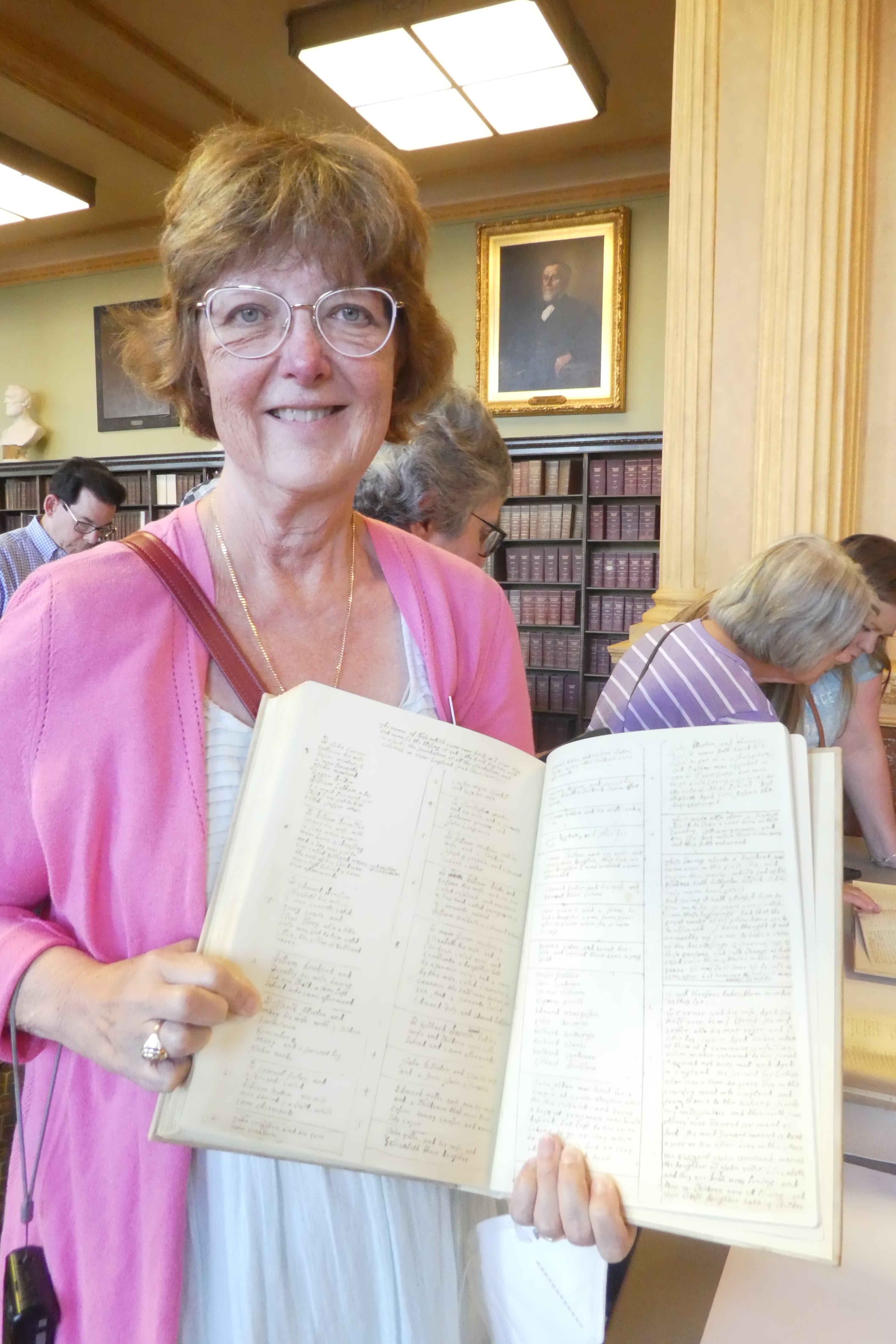
Yours truly with a facsimile of Bradford's journal
open to the page where he lists the Mayflower passengers

The original journal (under glass) open to the same page listing families

In William Bradford's own handwriting,
he listed the Allerton family, my ancestors

Yours truly, examining
Bradford's journal under glass

Everyone had to wake up early for the last day of the tour, to beat the traffic into Boston.  But it was well worth it because we had a special appointment arranged just for us at the Massachusetts State Library, which is located inside the Statehouse on Beacon Hill in Boston.  I had never been inside the Massachusetts State Library.  However, the special treat was not just seeing the library, it was seeing the original journal written by William Bradford documenting the Pilgrim's voyage to the new world and their early days in the Plymouth colony!

The Bradford journal originally had been kept by his family, and later it was stored in the Old South Meetinghouse in Boston for safekeeping. During the British occupation of Boston during the Revolution, the English soldiers looted the Old South and used the building as a horse stable. This manuscript was considered lost. In the middle of the 19th century the journal was found in England and returned to Massachusetts.  

Bradford's journal had not been viewed by the public in over five years.  Originally it was set to be displayed for the 400th anniversary commemoration of the arrival of the Mayflower, but those plans were cancelled due to the COVID pandemic.  A fine display case was built, and we were able to see the journal in this case.  It was very thrilling to see his journal first hand.  The staff knew we were all descendants, and they kindly opened his journal to the pages near the end of the book where he listed the original families.  We all had fun pointing to our own ancestors names inscribed on the pages.  

There were also three exact duplicates of the Bradford journal on the table. We were allowed to handle these duplicate versions, and turn the pages.  Of course I flipped through the books looking for references to my own ancestors.  

This was a very exciting part of the tour!  What a great finale for a great trip this week!  I'm so glad we had the chance to participate in this special viewing of the Bradford manuscript. 

The Boston Tea Party Museum

Our last stop on the tour was to visit the Boston Tea Party Museum.  This is more of an educational "experience" than a museum, and we had never been to it before. Isn't that always the way when you live right near a historic site? This part of the tour had nothing to do with the Mayflower or the Pilgrims, but it was a lot of fun and I was glad it was part of the tour (or I'd still never have experienced it!)


Our "identities" as participants in the Tea Party

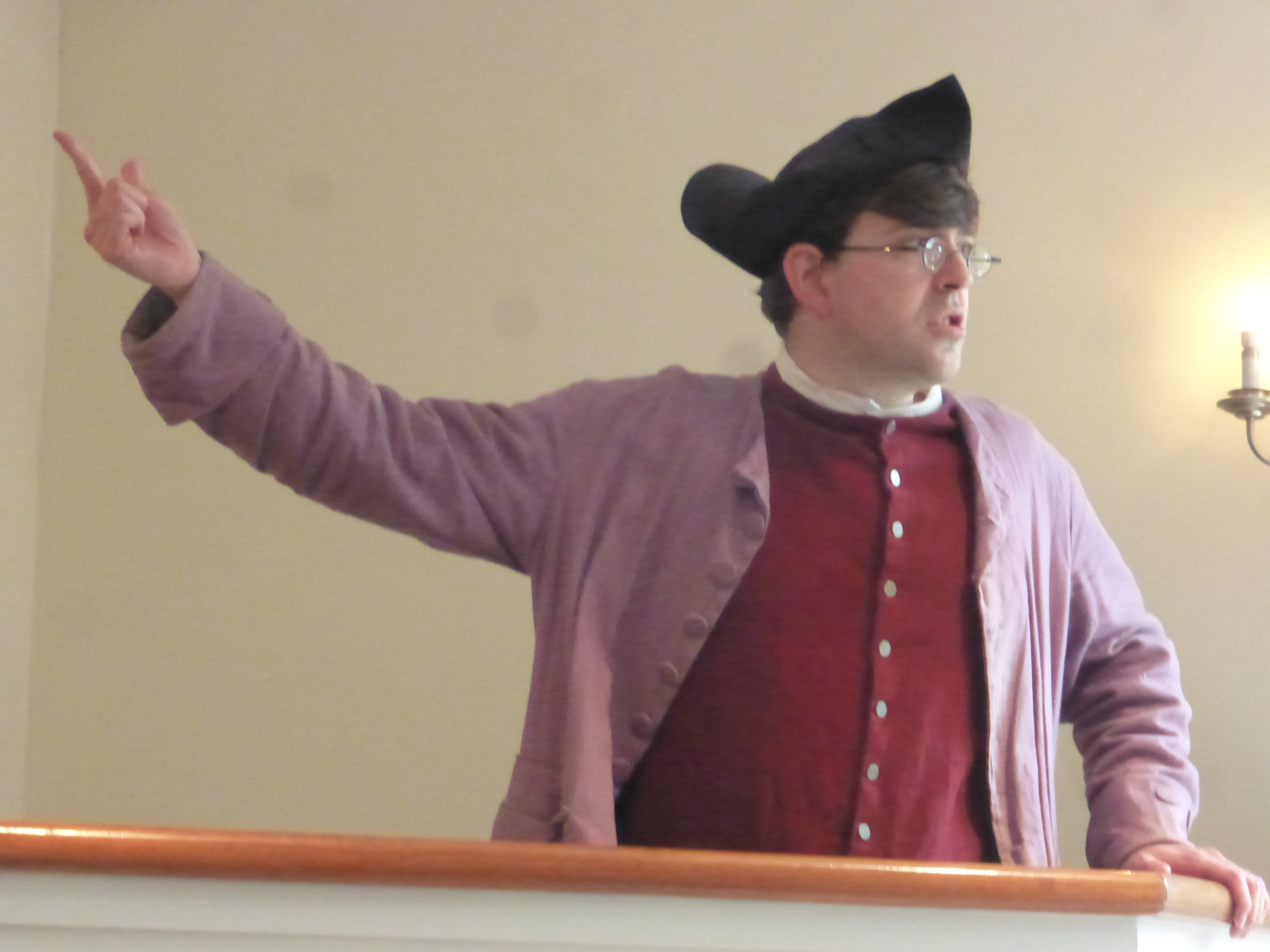
"Sam Adams" rallied the crowd with a speech

Audience participation in the debates over the tea


Throwing the tea overboard!

Vincent chose to be a "Son of Liberty"

Tea floating in Boston Harbor

The Boston Tea Party Museum is an interactive experience that starts with a meetinghouse where the audience listens to Sam Adams lecture on the problem at hand, taxation and the East India Tea Company.  Every audience member is given an identity as a citizen of Boston, some are loyal to the crown and some are patriots. After riling up the emotions, we stormed out of the meeting to board the ship Eleanor and throw the tea overboard. This was the fun part of the tour, and not just for the children - everyone who wanted to toss tea had a chance! 

After visiting the tea laden ship, there were several galleries to view with interactive exhibits.  One had actual artifacts from the Tea Party, including a tea chest that had washed ashore soon after the protest, and a vial of actual tea taken from one of the chests.  Other galleries showed citizens of Boston debating both sides of the conflict.  One gallery that Vincent especially enjoyed had the paintings on the wall come to life to argue both sides - a portrait of King George III included.  The last gallery showed how the tea protest finally led up to the Battles of Lexington and Concord, and thus the American Revolution. 

This museum also had a great gift shop, and a very nice tea room with a view of the harbor and two replica ships tied up to the museum. I'd love to go back soon and try the tearoom! Although it had nothing to do with the Pilgrims, I'm glad the Tea Party museum was included in our tour. 

For the truly curious: 

The Massachusetts State Library:  https://www.mass.gov/orgs/state-library-of-massachusetts  and this webpage has a digitized version of Bradford's journal:  https://www.mass.gov/info-details/bradfords-manuscript-of-plimoth-plantation  

The Boston Tea Party Museum:   https://www.bostonteapartyship.com/  

---------------------------------

To cite/link to this blog post: Heather Wilkinson Rojo, "Day Five of the "Path of the Pilgrims" Tour by the GSMD", Nutfield Genealogy, posted July 29, 2022, ( https://nutfieldgenealogy.blogspot.com/2022/07/day-five-of-path-of-pilgrims-tour-by.html: accessed [access date]). 

Thursday, July 21, 2022

Day Two "On The Path of the Pilgrims" Tour by the GSMD

 Day One  https://nutfieldgenealogy.blogspot.com/2022/07/on-path-of-pilgrims-tour-from-general.html  

Day Two  https://nutfieldgenealogy.blogspot.com/2022/07/day-two-on-path-of-pilgrims-tour-by-gsmd.html  

Day Three  https://nutfieldgenealogy.blogspot.com/2022/07/day-three-of-path-of-pilgrims-tour-by.html  

Day Four   https://nutfieldgenealogy.blogspot.com/2022/07/day-four-on-path-of-pilgrims-tour-by.html 

Day Five   https://nutfieldgenealogy.blogspot.com/2022/07/day-five-of-path-of-pilgrims-tour-by.html   

The Plimoth Patuxet Museum, Plymouth, Massachusetts

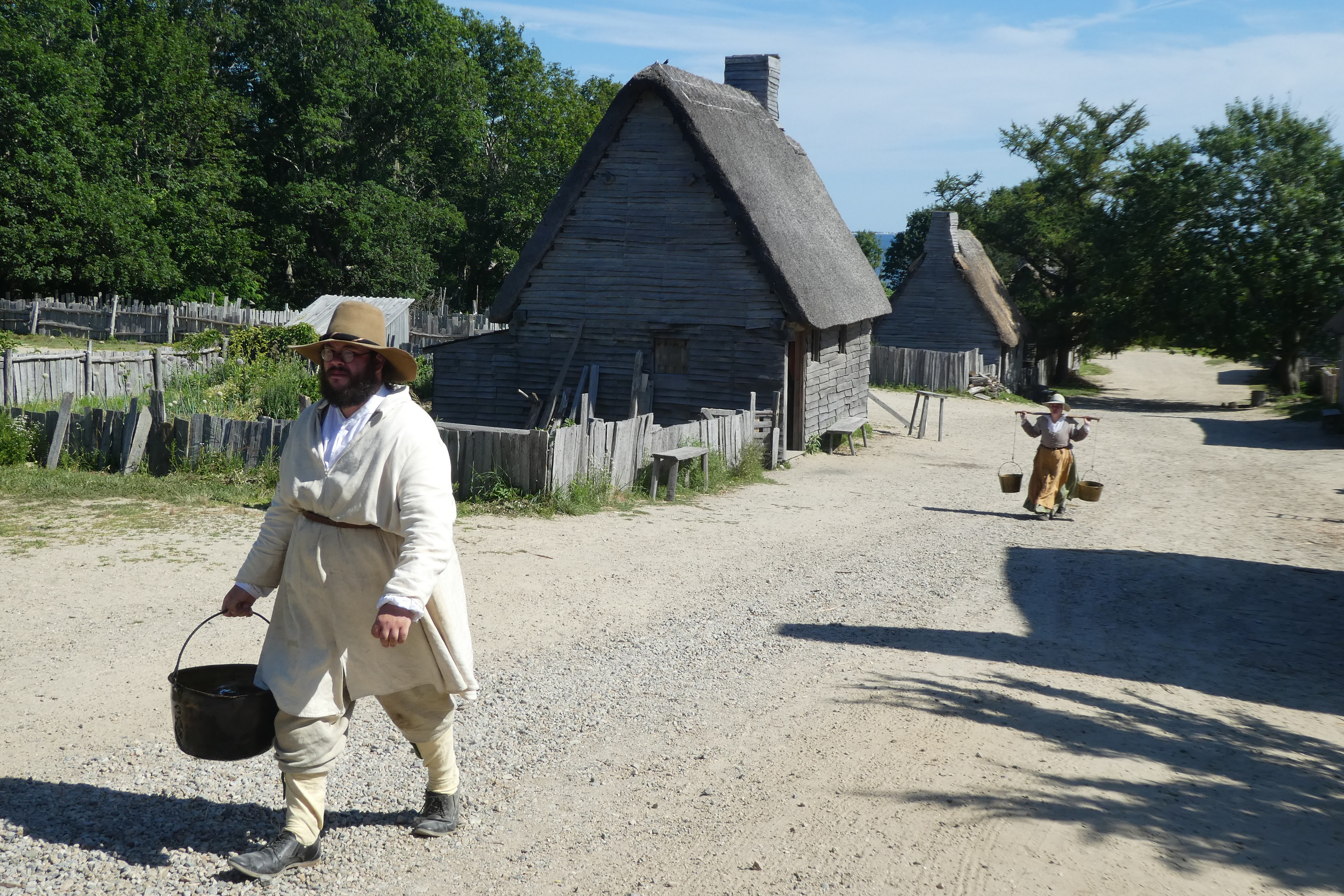
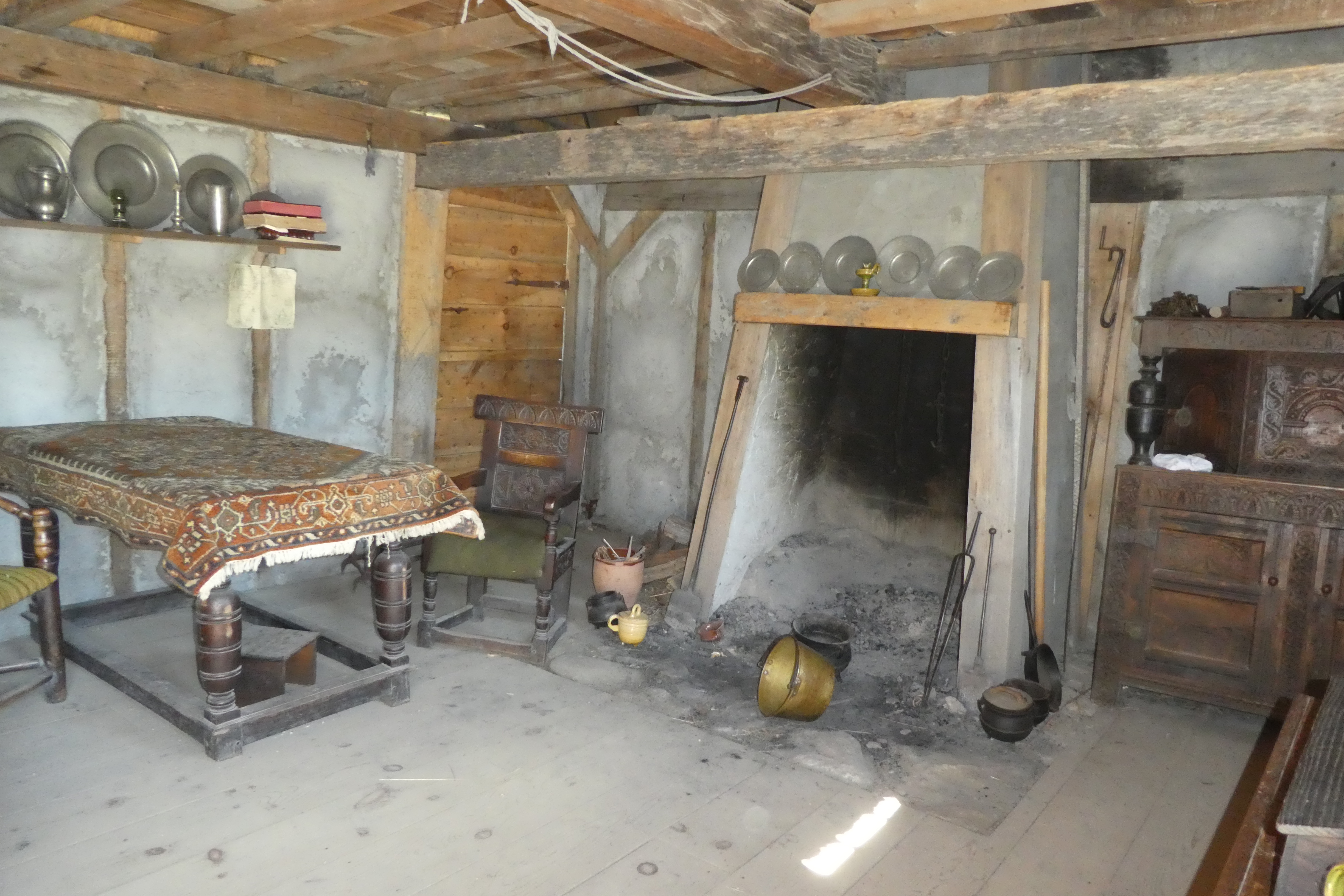
The second day of our tour "On the Path of the Pilgrims" took us to the Plimoth Patuxet museum (formerly known as Plimoth Plantation).  This was a highlight of the tour for the members who had never visited Plymouth, Massachusetts before this trip.  It is an open air museum where the re-enactors in the English village represent actual villagers in 1627, and portray life in the colony.  In the Wampanoag homestead the staff represents life in a traditional setting, with wetus, mishoons, a cooking area, gardens, and artifacts. There is also a visitor center with exhibits and a film, and a craft center with artisans doing pottery, woodwork, baking, and making herbal remedies. 

Vincent and I went directly to the English village, and then to the craft center, and then to the visitor center to visit the bookshop.  We didn't have a lot of time to see the museum, but we are life members and visit at least once or twice a year so we knew exactly what we wanted to see.  The last time we visited the re-enactors all wore masks and the interiors of the houses in the English village were closed to visitors.  This time we were able to go inside the homes and interact more with the staff, which was delightful. Mayflower descendants have a lot of fun visiting with their ancestors, and on this visit we were able to interact with ancestors John Howland, Elizabeth Tilley (John's wife), and Mary Beckett (wife of Mayflower passenger George Soule).  

My "ancestors", John Howland and Elizabeth Tilley,
carrying water to their house 

The interior of a house at Plimoth Patuxet

The fort and meetinghouse at Plimoth Patuxet (a replica)

The current Meetinghouse
at Plymouth, Massachusetts

After the museum our tour went to the Plymouth Meetinghouse, which is now operated by the General Society of Mayflower Descendants as a museum, while still being used for services twice a year by the original Unitarian congregation that built the church in 1894, on the site of the original meetinghouses built earlier by the Separatists and Congregationalists.  It is also a museum and will be used by the town as a meetinghouse and event center after the renovations are complete.  The exterior has been cleaned and restored, and now the interior restoration is planned.  The structure will be strengthened to accomodate an elevator, and a new entrance will be built. The santuary stenciling and walls will be cleaned and repaired, as well as other plans.  It is a multi million dollar renovation that will take many years to complete. 

Our group in front of the Plymouth Meetinghouse


The sanctuary inside the Plymouth Meetinghouse

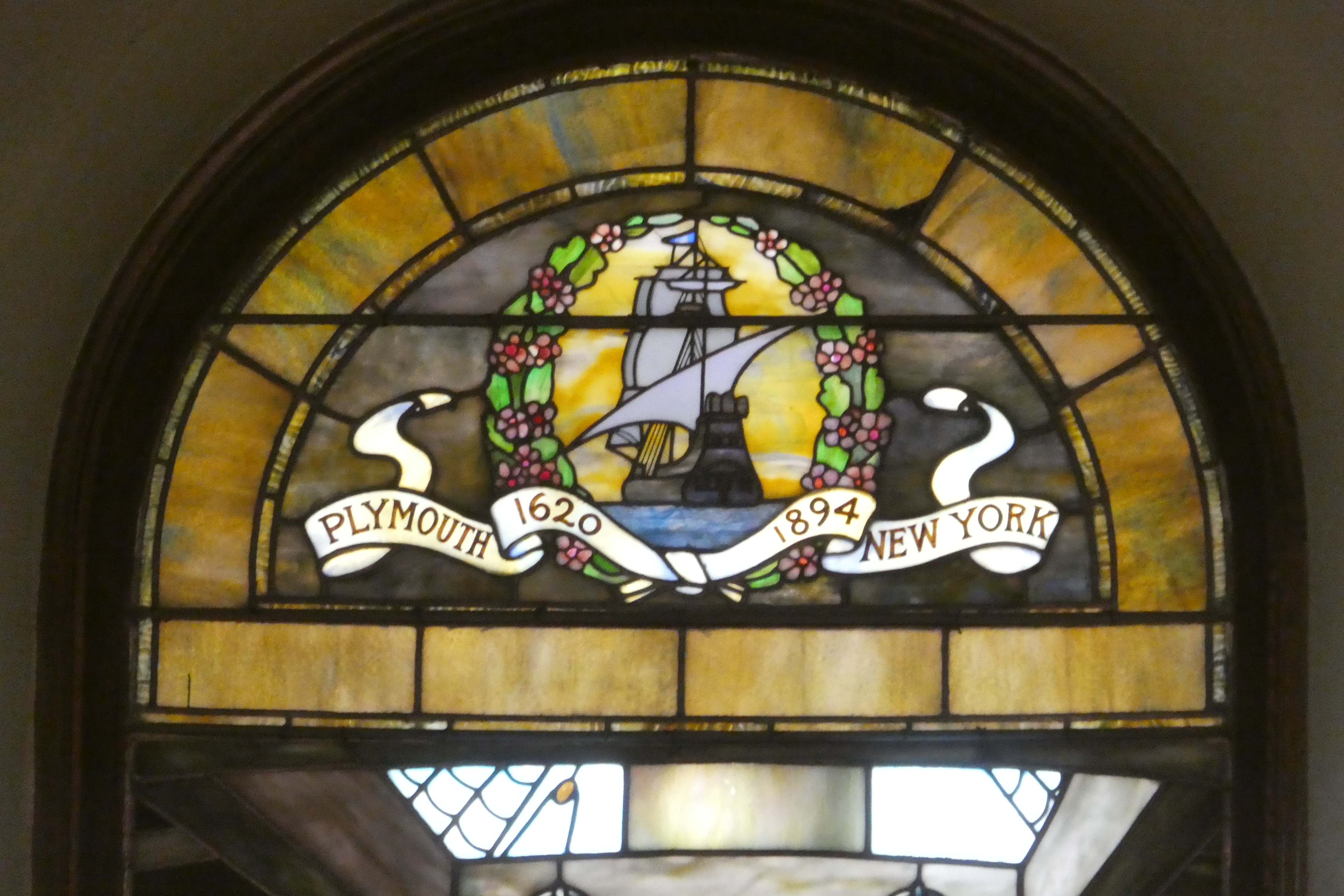
Tiffany stained glass windows show my ancestor 
Rev. John Robinson giving a farewell to the Pilgrims
leaving Delftshaven, Holland for the New World

The extravagant windows were donated by the
New York Mayflower Society 


Yours Truly boarding our Lobster Roll Cruise boat 
at the harbor in Dennis, Massachusetts (Cape Cod)

Mayflower Beach in Dennis, Massachusetts

After touring the meetinghouse, we boarded the bus for a drive to Dennis for a very nice cruise on Cape Cod bay called the Lobster Roll Cruise.  We traveled along the coast as far as Mayflower Beach while enjoying a scrumptious lunch where we were served 8 ounce lobster rolls and salads.  I've had a few lobster rolls this summer, but this was by far the best one yet!  And it was fun watching the coast and imagining how it must have looked 400 years ago to our Mayflower ancestors.  

The Jabez Howland House in Plymouth, Massachusetts

Interior of the Jabez Howland House

Some of these panes of glass are original 17th century

After the tour we returned to Plymouth for a tour of the Jabez Howland House.  This historic house is the oldest house in Plymouth (1667), and the only house in Plymouth where a Mayflower passenger (John Howland) lived.  Jabez was the son of passengers John Howland and Elizabeth Tilley.  The house is operated as a museum by The Pilgrim John Howland Society.  The same society also maintains the historic sites at Rocky Nook in Kingston, Massachusetts where John and Elizabeth Howland had a homestead.  

The house is full of artifacts from the 17th century, including many owned by the Howland family.  There is a small gift shop, too.  

The Mayflower II at her berth in Plymouth Harbor

The Mayflower Women fountain

After the Jabez Howland house we were dropped off at Plymouth harbor for dinner on our own, and time to walk around the waterfront.  Vincent and I wandered along and saw the Mayflower II, Plymouth Rock, the Mayflower Women fountain and Brewster Gardens.  It was a lovely day, and we had fine weather for all the walking and sightseeing.

Stay tuned for Day Three coming soon!

For the truly curious:

Part One "On the Path of the Pilgrims Tour"   https://nutfieldgenealogy.blogspot.com/2022/07/on-path-of-pilgrims-tour-from-general.html   

The Plimoth Patuxet Museums website:   https://plimoth.org/  

The Mayflower Meetinghouse webpage:   https://themayflowersociety.org/visit/mayflower-meetinghouse/   

The Lobster Roll Cruise website:   https://capecodlobstercruise.com/  

The Jabez Howland House:   https://pilgrimjohnhowlandsociety.org/The_Jabez_Howland_House  

-------------------------------

To cite/link to this blog post:  Heather Wilkinson Rojo, "Day Two "On The Path of the Pilgrims" Tour by the GSMD", Nutfield Genealogy, posted July 21, 2022, ( https://nutfieldgenealogy.blogspot.com/2022/07/day-two-on-path-of-pilgrims-tour-by-gsmd.html: accessed [access date]). 

Tuesday, January 18, 2022

Just for Fun! Pilgrim Names Seen Around Plymouth, Massachusetts

 These fun images were photographed around the town of Plymouth last fall during the General Society of Mayflower Descendants Board of Assistants meeting.


--------------------

To Cite/Link to this blog post:  Heather Wilkinson Rojo, "Just for Fun!  Pilgrim Names Seen Around Plymouth, Massachusetts", Nutfield Genealogy, posted January 18, 2022, ( https://nutfieldgenealogy.blogspot.com/2022/01/just-for-fun-pilgrim-names-seen-around.html

Saturday, January 9, 2021

Two new versions of Bradford's "Of Plimoth Plantation" for you to consider

I have many versions of William Bradford's first person journal
Of Plymouth Plantation.  Why more?

Santa brought me a new 2020 edition of William Bradford's journal of the first years of the Plymouth Colony known as Of Plimoth Plantation.  Then their majesties, Los Reyes Magos (The Three Wise Men), brought me another 2020 edition of Of Plimoth Plantation on January 6th!  These were two different books.  How were they different from previous editions, and why do I need more versions of this important book? See the end of this post for a full list of these books, all editions of the same manuscript.

We know so much about the Plymouth Colony, the Wampanoag people, the passengers and their history because of Bradford's first hand account known as Of Plimoth Plantation.  No other early English colony in the USA has as much first hand documentation as Plymouth. (Although the Spanish and French colonies had excellent records)  We have Bradfords's journal, Mourt's Relation, and Edward Winslow's Good Newes from New England all written by people who lived through those first difficult years at Plymouth.  Because of these wonderful manuscripts we can reconstruct the history, along with new archaeological evidence, and other documents and artifacts from this time period. Interpretation of these documents, including Bradford's manuscript, has changed over the years as we learn more about 17th century Plymouth Colony. 

If you look above, I have a big stack of my different editions of Bradford's journal.  I also have an old version of Of Plymouth Plantation printed in the 1950s and edited by Samuel Eliot Morison.  Each book is a transcription of Bradford's original manuscript, which is in the Massachusetts State Library in the statehouse in Boston.  This manuscript has an interesting history, including being missing for more than a century.  It was hidden in the Old South Church of Boston during the American Revolution, but disappeared after British soldiers occupied the building.  Then the manuscript was found in Bishop of London's library, and returned to Massachusetts in 1897. A copy was published in 1912.  

Since that time many versions of Bradford's journal have been published since 1912. The most famous was Morison's 1952 edition, with his notes and transcription.  Since then many editors and historians have published new transcriptions, with new discoveries to mention in notes, and some new transcriptions based on new evidence.  In the photo above you can see my 2002 or 50th anniversary reprint of this classic book by Morison.  

I cherish my 1981 paperback copy of Of Plimoth Plantation, even though it is a small, textbook version because it was gifted to me when I became a member of the Mayflower Society.  I enjoyed Caleb Johnson's 2006 version because he signed it, and I heard him speak about it at an event in Plymouth, Massachusetts. Caleb's edition includes many supplementary documents, which makes it very interesting for Mayflower research. 

I knew that the 400th anniversary of arrival of the Mayflower would probably be the year another edition would be published. However, I was very surprised to learn that two books would be published! I didn't know how they would differ until I actually held them in my hands this week.  


First,  I received the book Of Plimoth Plantation by William Bradford, 2020, edited and introduced by Kenneth P. Minkema, Francis J. Bremer, and Jeremy D. Bangs.  I knew about this book last year from attending several Mayflower events at the New England Historic Genealogical Society before the pandemic hit.  It was advertised in their journals, and anticipated by many genealogists and historians. It was published by both NEHGS and the Colonial Society of Massachusetts.  This book not only has three introductions, but also a special introduction by Paula Peters of the Wampanoag Nation, and a special edition of Bradford's Hebrew Lists (he was teaching himself to read Hebrew) with an introduction by Eric D. Raymond of the Yale Divinity School.  It contains 755 pages, and is the biggest book of all the editions of Bradford's journal.


I was surprised to see the second book I was gifted of Of Plimoth Plantation was a slim volume of 317 pages.  This 2020 book was published by the Plimoth Patuxet Press of Plymouth, Massachusetts (formerly known as the Plimoth Plantation Museum).  The introductory materials and forward are from the Massachusetts State Library, and run only ten pages. What makes this book remarkable and completely different is that the rest of the book is a facsimile of the original book, completely restored and digitized between 2012 and 2014.  The images of the digitized pages are almost the same size as the real book, which makes this edition very close to Bradford's journal. It's easy to imagine you are reading his historic journal while holding this book. 

In 2019 I attended a reception in Plymouth when an edition of The Brewster Book Manuscript was published, and the original, restored volume of this book was displayed. You can read all about the Brewster book at my two blog posts HERE and HERE.  This amazing edition has each digitized page on one side and the transcription on the opposite page, so the reader can compare the original to the printed text.  I knew the new Bradford book would be a digitized edition of his journal, and at first I was disappointed that there was no printed transcription of his ancient handwriting. However, now I'm glad it is completely original, with no interruptions of transcriptions or notes. After a day of figuring out his script, I can easily read straight through the book with no trouble. If I can do it, you can do it, too! If you already own a transcribed version of Bradford's Of Plimoth Plantation, this might be a good choice for you. 

Pages 288 and 289 of this edition have the Mayflower passenger list

Page 288 close up 
Including my Allerton, Standish, 
and Tilley ancestors

For the truly curious, a listing of the Bradford Journals on my book shelf (newest to oldest):

Bradford, William, Of Plimoth Plantation: A Facsimile of his Original Manuscript. Plimoth Patuxet Press: Plymouth, MA, 2020

Bradford, William, edited by Minkema, Kenneth P.; Bremer, Francis J.; Bangs, Jeremy D., Of Plimoth Plantation by William Bradford: The 400th Anniversary Edition. Colonial Society of Massachusetts and New England Historic Genealogical Society, 2020. 

Bradford, William, edited by Caleb Johnson, Of Plimoth Plantation: Along with the full text of the Pilgrim's Journals for their first year at Plymouth.  Xlibris Corporation, 2006. 

Bradford, William, edited by Samuel Eliot Morison, Of Plimoth Plantation 1620 - 1647 by William Bradford Sometime Governor Thereof.  Alfred A. Knopf: New York, 2002. (A 50th anniversary edition or reprint of the 1952 edition)

Bradford, William, edited by Francis Murphy, Of Plymouth Plantation 1620 - 1647.  Modern Library College Editions by Random House, 1981. 

Also mentioned above:

A Sneak Preview of the New Brewster Book Manuscript in Plymouth, Massachusetts:  https://nutfieldgenealogy.blogspot.com/2019/09/sneak-preview-of-new-brewster-book.html

Part Two of the Brewster Book Manuscript: https://nutfieldgenealogy.blogspot.com/2019/09/part-two-of-brewster-book-manuscript.html 

My annual list of Christmas gift books 2020 (is there a book in this list that you need to read?):

https://nutfieldgenealogy.blogspot.com/2021/01/what-did-genea-santa-bring-christmas.html  

-------------------------

To Cite/Link to this post:  Heather Wilkinson Rojo, "Two new versions of Bradford's 'Of Plimoth Plantation' for you to consider", Nutfield Genealogy, posted January 9, 2021, ( https://nutfieldgenealogy.blogspot.com/2021/01/two-new-versions-of-bradfords-of.html: accessed [access date]). 

Tuesday, December 22, 2020

The Puritans and Christmas


On the first Christmas in the New World, 25 December 1620, the Mayflower passengers stranded in Plymouth, Massachusetts spent the day working on building their new settlement, building homes and finding food. There was no celebration.  The following year, in 1621, a group of laborers were seen playing "stoole-ball" (an early version of baseball), and Governor William Bradford punished them. He believed that his conscience could not let them play whilst others were working.  In his journal he wrote "One the day called Christmas Day, the Governor called [the settlers] out to work as usual. However, the most of the new company excused themselves and said it went against their consciences to work on that day.  So the Governor told them that if they made it [a] matter conscience, he would spare them till they were better informed". When he later found them playing stoole-ball he confiscated their ball, forbade reveling, and sent them home. 

We can't confuse the Separatists with the Massachusetts Bay Puritans, but remember that like the Presbyterians and other religions, all were Calvinists. All believed in a strict interpretation of their religion, which included turning away from "Papist" holidays.  None celebrated any religious holidays - no Easter, no Christmas, no Lent.  And believe it or not, no other holidays, religious or civic.  Why? 

1659 Massachusetts statute:   "For preventing disorders arising in several places within this jurisdiction, by reason of some still observing such festivals as were superstitiously kept in other countries to the great dishonor of God and offence of others; It is therefore ordained by this Court and the authority thereof, that whosoever shall be found observing any such day as Christmas and the like, either by forbearing labor, feasting, or any other way upon any such account as aforesaid, every such person so offending shall pay for each such offence, five shillings as a fine to the Country."  

In 1712 Reverend Cotton Mather gave a famous anti-Christmas sermon.  He argued against play, excessive drinking, and inappropriate behaviors, but allowed for the possibility of marking the day. 

A quote from Judge Samuel Sewell's (1652 - 1730) diary:  "Decr. 25, 1685.  Friday.  Carts come to town and shops open as is usual.  Some somehow observe the day; but are vexed I believe that the body of the people profane it, and blessed be God no authority yet to compel them to keep it."  The following year, on Christmas of 1686 the Royal Governor, an Anglican no doubt, Sir Edmund Andros, held a Christmas service in Boston with prayers and Christmas hymns. He was escorted by redcoats to assert his authority in the matter. 

In 1722, also from Judge Sewell's diary:  "Decr. 19. His Excellency took me aside to the South-east window of the Council Chamber to speak to me about adjourning the Gen. Court to Monday next because of Christmas.  I told his Excellency I would consider it."  

However, Judge Sewell had already made up his mind to not keep Christmas, but he remained very diplomatic, see his diary entry the next day:  "Decr. 20.  I invited Dr. Mather to Dine with me.  After Dinner I consulted with him about the adjournment of the Court. We agreed that 't would be expedient to take a vote of the Council and Representatives for it." 

Of course, in 1722, the Royal Governor of Massachusetts was Samuel Shute (1662 - 1742), and was of course a member of the Anglican church. Shute argued for keeping Christmas. He was a controversial figure in Puritan Boston due to his attendance at Anglican services, and his habit of hosting many parties at his mansion.  [Michael Batinski, Jonathan Belcher, Colonial Governor, 1996 University Press of Kentucky, p. 29] 

The matter was argued in the Council the following day, with both sides giving their opinions.  In the end, the governor proclaimed a Christmas holiday.   This only set up decades of controversy in New England.  Shute soon left the colony and returned to England in January 1723, where he was free to celebrate Christmas. He never married, and died in England on 15 April 1742.  [Henry Wilder Foote, John Carroll Perkins, Warren Winslow, 1882, Annals of Kings Chapel, Little, Brown Co., p. 267]  

Why did the Puritans dismiss Christmas?  Was it because it was based on a pagan holiday? Because it was no biblically based?  No, it was because it promoted play and waste at a time when people should be working.  Thus, they had no holidays except Sundays, and on days of fasting, and days of Thanksgiving.  The matter became controversial again at the time of the American Revolution, when the colonials in Boston saw Christmas as a royalist celebration.  The King, as the head of the Anglican church, represented everything the Patriots were fighting against

The Massachusetts senate gathered for work on Christmas Day in 1797.  In New England school was held on Christmas day until the 1850s.  But soon after, the Puritan sentiment against making merry began to wane.  In 1856 Christmas became a holiday in Massachusetts.  

For the truly curious:

The Not-Quite Puritans, by Henry W. Lawrence, 1928, Boston, Little, Brown Co. 

"Christmas in Early New England, 1620- 1820: Puritanism, Popular Culture, and the Printed Word", by Stephen W. Nissenbaum, Proceedings of the American Antiquarian Society, 106: 1: 79 (January 1996) 

Are you curious about how the early Presbyterian Scots Irish settlers celebrated Christmas in Nutfield?  Click on this 2014 blog post to read all about it!  https://nutfieldgenealogy.blogspot.com/2014/12/how-did-scots-irish-celebrate-christmas.html  

------------------

To cite/Link to this post: Heather Wilkinson Rojo, "The Puritans and Christmas", Nutfield Genealogy, posted December 22, 2020, ( https://nutfieldgenealogy.blogspot.com/2020/12/the-puritans-and-christmas.html: accessed [access date]). 
Saturday, December 8, 2018

Surname Saturday ~ PICKWORTH of Plymouth and Manchester, Massachusetts


PICKWORTH / PECKWORTH / PIKWORTH / PICKWORD

My 10th great grandfather, John Pickworth (about 1606 – 1663) arrived in New England about 1631, and lived briefly in Plymouth before settling in Salem, Massachusetts.  He eventually lived in that part of Salem known as “Jeffrie’s Creek” which is now the town of Manchester-by-the-Sea, Massachusetts.  On 6 February 1631/2 [Winthrop Papers, 1498 – 1654, Volume 3, page 65] the Governor of Plymouth, William Bradford, wrote to John Winthrop, the Governor of the Massachusetts Bay Colony, that  “John Pickworth, he came but as a sojourner to work for a few weeks, in which time he got a wife, and so is long since returned double, and hath no cause to complain, except he hath got a bad wife”.  There is no description of why the Governor thought Pickworth’s wife was “bad”.  She is known in records as Anne, but her maiden name is a mystery.

John Pickworth was a very active citizen of Manchester.  He was elected to several town positions, including selectman and constable.  He owned many parcels of land, and a share of the town sawmill.  He was also in court a few times, and the records show him being fined for drunkenness, and for fighting with John Norman (also my 9th great grandfather from Manchester, Massachusetts).  He was a member of the church in Salem, and had eight of his nine children baptized there.

John Pickworth died in 1663, and he left a will which names his wife, sons, and daughters.  The inventory of his estate included his land, house, meadows, and his share of the sawmill.  His wife died in 1682, named as “the widow Ane Pickworth Of Manchester” who left items to her daughters and to granddaughters “Ane Pickworth” (daughter of son Joseph), “Ane Killem” (daughter of John Kilham), and “Ane Sibblie” (daughter of her daughter Rachel Sibley).  All three granddaughters who were listed in the will were all named Anne. 

I descend from John and Anne’s daughter, Ruth Pickworth (1633 – 1716) who married Nathaniel Masters about 1653 and had seven children.  Her husband was presented at court in Salem for “his wife being with child by him before they were married, the act having been committed in Pequott Harbor.”  The case was sent to Connecticut for trial (Pequot Harbor is the mouth of the Pequot River (now the Thames River and the city of Groton, Connecticut).  I have not seen a record of the trial in Connecticut.

Some PICKWORTH resources:

For this blog post I used the sketch about John Pickworth in The Great Migration Begins, Volume III, pages 1462 – 1464.  I also researched in the Essex Quarterly Court records, the Winthrop Papers (see above), the Salem Town Records, and the book History of Manchester, Essex County, Massachusetts, 1645 – 1895 by Rev. Darius Francis Lamson, 1895.  See Alicia Crane Williams’ blog post “Human Nature Writ Large” at the Vita Brevis blog of NEHGS 2 January 2014 for another account of John Pickworth’s brawl with John Norman https://vitabrevis.americanancestors.org/2014/01/human-nature-writ-large/   

My PICKWORTH genealogy:

Generation 1:  John Pickworth, born about 1606 probably in England, and died between 27 June 1663 and 25 August 1663 in Manchester, Massachusetts; married about 1631 to Anne Unknown.  Nine children.

Generation 2:  Ruth Pickworth, baptized in Salem, Massachusetts on 14 October 1638, died on 5 April 1716; married about 1653 to Nathaniel Masters, son of John Masters and Joan Unknown.  He was born about 1613 and died 1 July 1708 in Manchester.  Seven children.

Generation 3: Lydia Masters m. Josiah Littlefield
Generation 4: Anna Littlefield m. Jacob Perkins
Generation 5: Stephen Perkins m. Comfort Chesley
Generation 6: Mary Perkins m. Nathaniel Batchelder
Generation 7: Jonathan Batchelder m. Nancy Thompson
Generation 8: George E. Batchelder m. Abigail M. Locke
Generation 9: George E. Batchelder m. Mary Katharine Emerson
Generation 10: Carrie Maude Batchelder m. Joseph Elmer Allen
Generation 11: Stanley Elmer Allen m. Gertrude Matilda Hitchings (my grandparents)

----------------------------

Heather Wilkinson Rojo, “Surname Saturday ~ PICKWORTH of Plymouth and Manchester, Massachusetts”, Nutfield Genealogy, posted December 8, 2018, ( https://nutfieldgenealogy.blogspot.com/2018/11/surname-saturday-pickworth-of-plymouth.html: accessed [access date]).