My original story about the George Washington Document is at this link:
http://nutfieldgenealogy.blogspot.com/2011/04/national-archives-good-news-bad-news.html
According to the stats on my blog, several people have been searching for “George Washington signed discharge papers”. I was curious, so I Googled the exact phrase to see what came up… Apparently a document just like Abner Poland’s discharge paper was up for auction this month at Heritage Auctions. You can see the document and the history of the certificate at this link: http://historical.ha.com/common/view_item.php?Sale_No=6054&LotIdNo=19072#Photo The auction ended on 7 April 2011 and had eleven bidders. It looks exactly like the one I didn’t see at NARA, and is also signed by John Trumbull and George Washington, just like Abner’s document. I don’t know the final auction price of the document.
Also, a story aired on PBS’s “Antiques Roadshow” on 3 November 2008 about a Revolutionary War Discharge paper signed by George Washington. It was in the possession of a descendant, and was valued by appraiser Stephen Massey at $6,000 to $10,000. It was in rough shape, not having been preserved properly, and it didn’t look like Abner’s document. I remember seeing this episode and remarking to my family that we had an ancestor who once had a similar paper, and they all said they wish he had kept it instead of turning it in for a pension. Me, too! You can see the short transcript of that particular episode of “Antiques Roadshow” here at this link http://www.pbs.org/wgbh/roadshow/archive/199613A20.html
At an auction on 29 October 2009 two George Washington items were sold at Swann Galleries in New York. One was a “partly printed military discharge signed, as Commander in Chief, June 11, 1783” and it sold for $11,400. This sounds very similar to Abner Poland’s document, which was partly printed and thus drove me to NARA in the first place to try to distinguish the printed parts from the actual signatures! You can read about it at http://www.collect.com/Categories/Article/Collectibles/Swann_Autograph_Auction_120109/L0
Another document, very different from Abner’s document but signed at Headquarters by General Washington, sold for $12,075.00 in 2005. You can see it here http://www.cowanauctions.com/auctions/item.aspx?ItemId=21473
And, of course, my own blog post was one of the top Google hits for the phrase “George Washington signed discharge papers” coming in at number four and number six on the search page.
There were many more hits on this Google search- actually there were 3,160,000 results- but I stopped looking. To me, I didn’t care about the monetary value of the certificate, nor would I spend big bucks for a certificate naming a stranger even if it were signed by General George Washington. To me the value was that an ancestor had touched it, carried it in his pocket, and valued it as a precious object . Priceless!
This was the best hit I found:
“George Washington autographs, signatures, signed letters and signed documents are more available to collectors and admirers than people imagine. There are two reasons: George Washington's position as Commander in the Revolutionary War caused him to sign letters dealing with all aspects of his army from relatively routine supply issues to the problems of the Army recruitment system relying on state militias. The text of Washington's signed letters during the Revolutionary War were almost always written by an aide and then signed by the General. Letters written in his hand and signed are unusual during the American Revolution. At the end of the Revolution, Washington signed many documents discharging soldiers. These signed documents are almost always in very worn condition because soldiers carried them in their pockets and unfolded and refolded many times before framing them, usually with a wood backing that caused staining of the document. Regardless of condition, a Revolutionary War discharge document signed by George Washington is a very personal window into history. .. Unfiltered sunlight took a serious toll, fading the ink of the recipient's name and George Washington's signature. Examples of this type of George Washington signed document in very fine condition are rare.”
From the website http://www.historical-autographs.com/george-washington.aspx
------------------------
Copyright 2011, Heather Wilkinson Rojo
Thursday, April 21, 2011
Wednesday, April 20, 2011
Concord Minute Man - Not so Wordless Wednesday
Happy Patriot's Day,
19 April 1775 was 236 years ago
1975
At Bicentennial of the Battle of Lexington and Concord
Me, and my little sister at the base of the Concord Minuteman Statue
2005
The Concord Minute Man Statue
Me and Hubby
2011
A miniature of the Concord Minuteman
by Daniel Chester French
at the National Portrait Gallery
Last year I posted photos of the Lexington Minutemen for Patriot's Day, and you can read it at this link:
-------------------------
Copyright 2011, Heather Wilkinson Rojo
Tuesday, April 19, 2011
Hezekiah Wyman and the Legend of the White Horseman
Happy Patriot's Day!
(This material may not be used without the express permission of the author)
Here is another story about the Wyman family and the Battle of Lexington on April 19, 1775. Hezekiah Wyman of Woburn was fifty-five years old, and he sported long flowing grey hair. He rode a white horse that day when he set off to aid his Lexington neighbors. According to the newspaper The Boston Pearl and Literary Gazette “his exploits were well nigh fabulous.”
The British called him “Death on the Pale Horse” as he rode through the woods, shooting the British regulars who marched in lines down the roads of Lexington. He picked off a number of British soldiers and wounded several others, and always escaped unhurt. When he ran out of bullets he continued to fight with his bayonet and charging the British. He pursued them all the way to Charlestown before he returned to Woburn.
Wyman also served for five months at Ticonderoga and for three months in New Jersey. He was paid 8 Pounds, 16 shillings and 10 pence for his service in 1777. He died in 1779 and left his son, Daniel, his white horse in his will. His story became known as “The Legend of the White Horseman.” Interestingly, he was baptized by the Arlington minister on 28 June 1779, a few days before his death.
According to Historian Charles Bahne, he found among Henry Wadsworth Longfellow’s papers a first draft of the famous “Paul Revere’s Ride” with an entire lost stanza about a tall grey rider, possibly Hezekiah Wyman. The lost lines were first read publicly in 2007 at a lecture Bahne presented at the Old South Meeting House, “Paul Revere’s Ride Revisited”.
Hezekiah Wyman is another descendant of the original settler, Francis Wyman. He seems to come from a long line of warriors!
Generation 1: Francis Wyman, born 1594 in Westmill, Hertfordshire, England, died about 15 September 1658 in Westmill ; married 2 May 1617 to Elizabeth Richardson, daughter of Thomas Richardson and Katherine Duxford.
Generation 2: John Wyman, born in West Mill Parish, Hertfordshire, England, was baptized on 3 February 1621; married 5 November 1644 in Woburn to Sarah Nutt, born in England and came to America with her father, Myles Nutt. She married second on 25 August 1684 to Thomas Fuller of Woburn. I am descended of John’s brother, Francis Wyman, Jr. (1617 – 1699). He was my 9x Great Grandfather.
Generation 3: Seth Wyman, born 3 August 1663 in Woburn, died on 26 October 1715; married on 17 December 1685 in Woburn to Esther Johnson, daughter of Major William Johnson. Seth Wyman was a lieutenant in the Woburn Militia.
Generation 4: Seth Wyman, born 13 September 1686 in Woburn, died on 5 September 1725; married 26 January 1715 in Billerica to Sarah Ross. Seth Wyman was a soldier under Lovewell, and was presented with a sword to acknowledge his bravery and good conduct for the fight at Pigwocket.
Generation 5: Hezekiah Wyman, born on 5 August 1720 in Woburn, died in 28 June 1779 in Arlington; married on 20 February 1744/45 in Woburn to Sarah Reed, daughter of Israel Reed and Hannah Wyman.
--------------------------
For more information:
http://nutfieldgenealogy.blogspot.com/2010/01/another-cow-salmon-and-sam-adams.html My first story about the Wyman family and the battle of Lexington. In this story, a Wyman wins a cow for aiding a famous refugee on the day of the battle.
http://wyman.org/wyman-library/wyman-libray-4 This newsletter posted on the Wyman Family Association website lists the Wymans who participated in the events on the day of 19 April 1775, including Hezekiah Wyman.
http://boston1775.blogspot.com/2010/06/documented-life-of-hezekiah-wyman.html one of a series of posts by J. L. Bell about Hezekiah Wyman. Bell has documented Hezekiah's life over several years, always posting near Patriot's Day, 19 April.
------------------------------
Heather Wilkinson Rojo, "Hezekiah Wyman and the Legend of the White Horseman", Nutfield Genealogy, posted 19 April 2011, ( https://nutfieldgenealogy.blogspot.com/2011/04/hezekiah-wyman-and-legend-of-white.html: accessed [access date]).
(This material may not be used without the express permission of the author)
Here is another story about the Wyman family and the Battle of Lexington on April 19, 1775. Hezekiah Wyman of Woburn was fifty-five years old, and he sported long flowing grey hair. He rode a white horse that day when he set off to aid his Lexington neighbors. According to the newspaper The Boston Pearl and Literary Gazette “his exploits were well nigh fabulous.”
The British called him “Death on the Pale Horse” as he rode through the woods, shooting the British regulars who marched in lines down the roads of Lexington. He picked off a number of British soldiers and wounded several others, and always escaped unhurt. When he ran out of bullets he continued to fight with his bayonet and charging the British. He pursued them all the way to Charlestown before he returned to Woburn.
Wyman also served for five months at Ticonderoga and for three months in New Jersey. He was paid 8 Pounds, 16 shillings and 10 pence for his service in 1777. He died in 1779 and left his son, Daniel, his white horse in his will. His story became known as “The Legend of the White Horseman.” Interestingly, he was baptized by the Arlington minister on 28 June 1779, a few days before his death.
According to Historian Charles Bahne, he found among Henry Wadsworth Longfellow’s papers a first draft of the famous “Paul Revere’s Ride” with an entire lost stanza about a tall grey rider, possibly Hezekiah Wyman. The lost lines were first read publicly in 2007 at a lecture Bahne presented at the Old South Meeting House, “Paul Revere’s Ride Revisited”.
Hezekiah Wyman is another descendant of the original settler, Francis Wyman. He seems to come from a long line of warriors!
Generation 1: Francis Wyman, born 1594 in Westmill, Hertfordshire, England, died about 15 September 1658 in Westmill ; married 2 May 1617 to Elizabeth Richardson, daughter of Thomas Richardson and Katherine Duxford.
Generation 2: John Wyman, born in West Mill Parish, Hertfordshire, England, was baptized on 3 February 1621; married 5 November 1644 in Woburn to Sarah Nutt, born in England and came to America with her father, Myles Nutt. She married second on 25 August 1684 to Thomas Fuller of Woburn. I am descended of John’s brother, Francis Wyman, Jr. (1617 – 1699). He was my 9x Great Grandfather.
Generation 3: Seth Wyman, born 3 August 1663 in Woburn, died on 26 October 1715; married on 17 December 1685 in Woburn to Esther Johnson, daughter of Major William Johnson. Seth Wyman was a lieutenant in the Woburn Militia.
Generation 4: Seth Wyman, born 13 September 1686 in Woburn, died on 5 September 1725; married 26 January 1715 in Billerica to Sarah Ross. Seth Wyman was a soldier under Lovewell, and was presented with a sword to acknowledge his bravery and good conduct for the fight at Pigwocket.
Generation 5: Hezekiah Wyman, born on 5 August 1720 in Woburn, died in 28 June 1779 in Arlington; married on 20 February 1744/45 in Woburn to Sarah Reed, daughter of Israel Reed and Hannah Wyman.
--------------------------
For more information:
http://nutfieldgenealogy.blogspot.com/2010/01/another-cow-salmon-and-sam-adams.html My first story about the Wyman family and the battle of Lexington. In this story, a Wyman wins a cow for aiding a famous refugee on the day of the battle.
http://wyman.org/wyman-library/wyman-libray-4 This newsletter posted on the Wyman Family Association website lists the Wymans who participated in the events on the day of 19 April 1775, including Hezekiah Wyman.
http://boston1775.blogspot.com/2010/06/documented-life-of-hezekiah-wyman.html one of a series of posts by J. L. Bell about Hezekiah Wyman. Bell has documented Hezekiah's life over several years, always posting near Patriot's Day, 19 April.
------------------------------
Heather Wilkinson Rojo, "Hezekiah Wyman and the Legend of the White Horseman", Nutfield Genealogy, posted 19 April 2011, ( https://nutfieldgenealogy.blogspot.com/2011/04/hezekiah-wyman-and-legend-of-white.html: accessed [access date]).
Monday, April 18, 2011
The Midnight Ride of William Dawes
![]() |
| William Dawes |
On April 19, 1775 there were three men who rode into Lexington and Concord to warn the minutemen about the British Regulars- Paul Revere (of course), Samuel Prescott and Wiliam Dawes. Dawes took the land route through Boston Neck, and Revere rowed across the Charles River to Charlestown, which you learned about in Longfellow’s poem. Dawes and Revere arrived in Lexington at the same time, around midnight. They met Samuel Prescott, a young doctor, on the way to Concord. Dawes lost his horse when the group was stopped by a patrol, Revere was captured and Prescott made it to Concord.
According to historians, like author David Hackett Fischer, there were actually more than 100 riders out that night, spreading the alarm all over eastern Massachusetts. An organized warning system of messengers delivered the news of the British marching to Concord. The true story is much more interesting than Longfellow’s poem, but most Americans still remember only Paul Revere.
When I was in college, the sidewalk along Massachusetts Avenue in Harvard Square was a popular meeting place. Bronze horseshoes set into the cement of the sidewalk and a nearby plaque commemorate Dawes and mark his movement along the route which is now roughly where Rt. 2 and Massachusetts Avenue travel west to Lexington and Concord. Dawes met up with Revere further along down the road.
For 30 years Eliot Square at Roxbury Highlands has celebrated William Dawes ride on the eve of 19 April 1775. An equestrian re-enacts the ride, and often recites the following poem, a parody on Longfellow's famous story about Paul Revere. The Discover Roxbury website lists the special events. My Dad could recite this poem by memory, and I remember him often repeating it on Patriot’s Day, with a twinkle in his eye.
Helen F. Moore published her poem “The Midnight Ride of William Dawes” in Century Magazine, 1896.
PS Did you know that this year is the 150th Anniversary of Longfellow's "Midnight Ride of Paul Revere"? There has been much discussion lately on how so close to the start of the Civil War (also celebrating it's 150th anniversary this week) that Longfellow wrote it as a "call to arms" or a "wake up call" to the North. Reread the poem and see if you agree! I used to mock this poem, since it was such a terrible rendition of the actual events, but now I think Longfellow's analogy is extremely interesting.
--------------------------------------
![]() |
| Andrew Tobin reenacting William Dawes 2010 in Roxbury, Massachusetts |
by Helen F. Moore
I am a wandering, bitter shade,
Never of me was a hero made;
Poets have never sung my praise,
Nobody crowned my brow with bays;
And if you ask me the fatal cause,
I answer only, "My name was Dawes"
'TIS all very well for the children to hear
Of the midnight ride of Paul Revere;
But why should my name be quite forgot,
Who rode as boldly and well, God wot?
Why should I ask? The reason is clear --
My name was Dawes and his Revere.WHEN the lights from the old North Church flashed out,
Paul Revere was waiting about,
But I was already on my way.
The shadows of night fell cold and gray
As I rode, with never a break or a pause;
But what was the use, when my name was Dawes!
HISTORY rings with his silvery name;
Closed to me are the portals of fame.
Had he been Dawes and I Revere,
No one had heard of him, I fear.
No one has heard of me because
He was Revere and I was Dawes.
------------------------------
For more information:
http://www.youtube.com/watch?v=rkchFAPvjgw a video of the recitation of the poem about William Dawes
Paul Revere's Ride, by David Hackett Fischer, Oxford University Press, 1995
-----------------------
To cite/link to this blog post: Heather Wilkinson Rojo, "The Midnight Ride of William Dawes", Nutfield Genealogy, posted 18 April 2011, ( https://nutfieldgenealogy.blogspot.com/2011/04/midnight-ride-of-william-dawes.html: accessed [access date]).
Saturday, April 16, 2011
1940 Census Sneak Peek for Genealogists
![]() |
| "The Census Enumerator" Norman Rockwell, 1940 |
So, in April 2012 how will you find your ancestors on the images? What information will be available? What is new or different about the 1940 census? At the NERGC conference last weekend I went to a well attended lecture on the upcoming 1940 census by Jean Nudd, an archivist at the Pittsfield, Massachusetts regional NARA facility. She had piles of handouts, and a well written syllabus, and an audience on the edge of their seats!
These are the major changes I found on the 1940 census form. If you look at the forms and information on the NARA website, I’m sure you will find many other changes of interest…
1. The 1940 enumerators conducted a population schedule, agriculture schedule and a housing schedule (with questions about homes similar to the farm and business schedules you may have seen in earlier censuses). Although this schedule would be of great interest to genealogist because it asked questions about rentals, mortgages, home values, heating, etc, you will not see it. It was disposed of by NARA.
2. One of the questions asked was “where were you in 1935?” This is a great clue to migration trails, and a nice way to track your ancestor midway between two censuses!
3. Employment questions. Remember that this census was taken at the end of the Great Depression. In taking so much statistical information for government purposes, they also left a genealogical goldmine for us in 2012! I counted thirteen columns of questions about employment on the 1940 form, including wages, or income derived from non-wages, or persons doing “Emergency Work” such as the CCC or WPA projects.
4. It identifies the person furnishing the information to the enumerator! Now we know who to blame for information that doesn’t match vital records.
5. Each person enumerated listed their highest grade of school completed.
6. On each page of 40 people, two random people were chosen to answer a list of supplemental questions for statistical purposes. This meant that 5% of the population was surveyed. Cross your fingers that one or two of your family members were chosen! This survey asks about a dozen extra questions, including parent’s birthplace, veteran’s service, and the new national insurance plans including Social Security (new in 1940).
Since the census won’t be indexed for a while, you will have to browse towns or enumeration districts to find your ancestors. There are aids to identifying those districts by using street maps, see the link to Steve Morse’s website below. This only works if they were living in the same home in 1930 and 1940. Otherwise, you can use town or city directories or old 1940 phone books to identify your ancestor’s street address.
Don’t forget, if you absolutely, positively can’t wait until 2 April 2012, you can always pay $65 to NARA for a transcription of one person on one census. You must be the person named in the search, or legal heir (provide a death certificate) See this link for more information for an “Age Search Service” of the 1940 to 2000 census records http://www.census.gov/genealogy/www/data/agesearch/index.html
There is a link to some great short films at the NARA website at http://www.archives.gov/research/census/1940/videos.html These were public newsreels and training films for the 1940 enumerators. They will give you a good preview of some of the questions the enumerators had to ask, and the types of answers you will find listed on the 1940 census forms. They are curiously humorous as well as being educational! Some of these films are also on YouTube.
Important Links:
http://www.archives.gov/research/census/1940/ for information on the 1940 census click on “1940”
http://www.1940census.net/ an alternate website about the 1940 census release, they even have a Facebook group you can join for the latest news!
Blank 1940 population schedule forms (use these as worksheets) http://www.archives.gov/research/census/1940/images/schedule-l.jpg
http://stevemorse.org/census/ed2040.php?year=1940 Steve Morse’s website to help you find the enumeration district of your ancestors in 1940, if they still lived in the same house as they did in 1930.
http://usa.ipums.org/usa/voliii/items1940.shtml Lists the questions on the 1940 population schedule form
Other Genealogy Blog Posts about the 1940 Census:
Leah’s Family Tree (formerly Internet Genealogist) at http://shbwgen.blogspot.com/2011/04/sngf-1940-census.html
Before My Time http://krentz.blogspot.com/2011/02/getting-ready-for-1940-census.html
NARAtions, the official NARA blog http://blogs.archives.gov/online-public-access/?p=377
-------------------------
Copyright 2011, Heather Wilkinson Rojo
Friday, April 15, 2011
A House in the Smithsonian Museum
Last week, at the Smithsonian Museum of American History, we stumbled upon an exhibit that took my breath away. The exhibit is called “Within These walls”. It was a house from Ipswich, Massachusetts reconstructed inside the museum, showing the generations of families that had lived there since the 1700s until the mid 21st century. Yes, it was beautiful, but what I loved most were the names of the families. The first five families who lived in this house were from my family tree!
| Timeline of house owners click to enlarge |
After this the house was sold to many other Ipswich inhabitants, but I only recognized one other surname from my family tree (Mears). I'm sure there are other cousin kinships though!
In the lineages below, I have highlighted the residents of the house in red…
Choate Lineage:
Generation 1: John Choate, born about 1624 in Groton, Colchester, England, and died 4 December 1695 in Ipswich, Massachusetts; married about 1660 to Ann Unknown. Eight children. My 9x Great Grandfather. I descend from Thomas, below, and Sarah, who married John Burnham in 1693.
Generation 2: Thomas Choate, born about 1671 in Ipswich, Massachusetts, died 31 March 1745 in Ipswich; married about 1690 in Ipswich to Mary Varney, daughter of Thomas Varney and Abigail Proctor. My 8x Great Grandfather. His sister, Sarah, is also my 8x Great Grandmother (she married John Burnham in 1693) He had nine children and I descend from Thomas’s daughter Anne, who married John Burham in 1710. He was also married to Mary Ayer in 1734, and to Hannah Burnham in 1743.
Generation 3: Francis Choate, born 13 September 1701 in Ipswich, died 15 October 1777 in Ipswich; married 13 April 1727 to Hannah Perkins.
Generation 4: Abraham Choate, born 24 March 1732 in Ipswich, died 23 April 1800 in Whitefield, Maine; married on 13 March 1755 in Ipswich to Sarah Potter, daughter of Aaron Potter and Sarah Appleton.
Dodge Lineage:
Generation 1: William Dodge, born before 19 September 1640 in Middlechinnook, Somerset, England, died 24 March 1720 in Beverly; married to Mary Conant, daughter of Roger Conant and Sarah Horton.
Generation 2: William Dodge, born 20 March 1663 in Wenham, Massachusetts, died 20 October 1765 in Wenham; married on 27 July 1699 to Prudence Fairfield, daughter of Walter Fairfield and Sarah Skipper.
Generation 3: William Dodge, born 6 March 1705 in Wenham, died 11 April 1777 in Ipswich; married on 9 January 1728 to Rebecca Appleton, daughter of Isaac Appleton and Priscilla Baker.
Generation 4. Isaac Dodge, born 26 February 1732 in Ipswich, died 29 June 1785 in Ipswich; married on 8 November 1755 in Ipswich to Elizabeth Day. His brother Abraham was born 17 August 1740 in Ipswich, died 16 June 1786 in Ipswich; married first on 17 April 1762 to Abigail Cogswell; married second on 2 June 1782 to Bethia Patch. Abigail is my 1st cousin 8x removed because her grandfather, Robert Woodbury, is my 8x Great Grandfather. (confused yet?)
Margaret Appleton’s Lineage:
Generation 1: Jacob Perkins, born before 12 September 1624 in Hillmorton, Warwickshire, England, died 29 January 1700 in Ipswich; married about 1648 to Elizabeth Whipple, daughter of Matthew Whipple and Anne Hawkins.
Generation 2: John Perkins, brother to my 8x Great Grandfather Jacob Perkins, born 3 July 1652 in Ipswich, died 15 March 1717 in Wenham; married about 1677 to Mary Fiske.
Generation 3: Sarah Perkins born about 1688 in Ipswich; married 17 December 1701 in Topsfield, Massachusetts to Oliver Appleton.
Generation 4 : John Appleton, born 1707 in Ipswich, died 4 January 1794; married on 4 August 1731 in Ipswich to Lucy Boardman. Lucy’s great grandfather is also Jacob Perkins, above, so John and Lucy were 2nd cousins.
Generation 5: Margaret Appleton, born 1742 in Ipswich, died February 1822; married first to Daniel Thurston, married second on 3 June 1773 in Ipswich to John Kinsman. Believe it or not, John Kinsman is my 2nd cousin, 8x removed. He is related to me through his mother, Hannah Burnham, and his great grandfather, Robert Kinsman, is my 9x Great Grandfather.
The official link to the Smithsonian Choate House exhibit http://americanhistory.si.edu/house/families/choates.asp
A Massachusetts realtor’s website, a member of the National Association of Realtor’s who sponsored the exhibit in Washington DC http://www.tricountyrealtors.org/id46.html
Descendants of John Choate http://www.paulasgenealogy.com/choate.htm
Descendants of John Perkins http://www.paulasgenealogy.com/perkins.htm
The Dodge Family Association http://www.dodgefamily.org/index.shtml
The Perkins Family http://www.perkins-family.org/
The Family of John Perkins of Ipswich, Massachusetts, by George Perkins, Salem, Mass, 1889. The full text of this book is available on http://www.archive.org/
Video of "Within These Walls", the Smithsonian Choate House exhibit:
http://vimeo.com/50368799
--------------------
Copyright 2011, Heather Wilkinson Rojo
Thursday, April 14, 2011
The Wilkinsons present Uncle Tom's Cabin
from The Clipper, a New York City newspaper, on 21 April 1877 (Vol. 25, P. 30)
"THE WILKINSON COMBINATION is reported as doing finely in New England with "Uncle Tom's Cabin," and Miss Lillie Wilkinson as Topsy. The play reaches its one hundredth consecutive performance this season by this company at Nashua, N. H., APril 14. The veteran Charley Wilkinson is the manager."
Charles DeWitt Clinton Wilkinson began his theatrical career as a comedian, with his first appearance in Worcester, Massachusetts on 10 December 1850. There is a complete biography of his life at FindAGrave http://www.findagrave.com/cgi-bin/fg.cgi?page=gr&GRid=39609203 even though there is no grave indentified in this sketch. The biography was taken from Memoirs of the Wilkinson Family in America, by Reverend Israel Wilkinson, 1869, Biography No. XXIV, on page 268. This book is available fully transcribed at Rootsweb.ancestry.com and also at Archive.org
The Worcester Music Hall took over the Worcester Fruit Preserving Company building in 1868, and became known as the Worcester Theater. In 1883 Charles DeWitt Clinton Wilkinson took out a six year’s lease on the building for $3,750 yearly rent, which sounds like it must have been a lot of money in those days! His widow, Leila (Layton) Wilkinson, retained the rental until the building was destroyed by a fire in 1889.
The “Lillie” in the poster is actually Leila, who was born in England, and was a renowned actress in her own right. A collection of broadside posters and playbills for "Wilkinson's Dramatic Company" can be seen at the Antiquarian Society in Worcester, at North Carolina State University library and also at the Boston Public Library. Charles DeWitt Clinton Wilkinson participated in the presentation of the play "Uncle Tom's Cabin" more than six hundred times!
Genealogy:
Generation 1: Lawrence Wilkinson, born about 1620 in Durham, England, died 9 August 1692 in Providence, Rhode Island; married to Susanna Smith, daughter of Christopher Smith and Alice Unknown.
Generation 2: Samuel Wilkinson, born about 1650 in Durham, England, died 27 August 1727 in Rhode Island; married on 18 September 1674 in Providence, Rhode Island to Plain Wickenden, daughter of William Wickenden, born about 1650 in Newport, Rhode Island, died about 1695.
Generation 3: Joseph Wilkinson, born 22 January 1683 in Smithfield, Rhode Island, died 24 April 1740 in Scituate, Rhode Island; married Martha Pray, daughter of John Pray and Sarah Brown, born 1689 in Providence Rhode Island, died 22 May 1784.
Generation 4: Joseph Wilkinson, born 1721, died 20 September 1755 in Scituate, Rhode Island; married on 6 December 1741 to Alice Jenckes, born 1724, died 1790, daughter of Obadiah Jenks and Alice Eddy.
Generation 5: Joseph Wilkinson, born 11 March 1751 in Scituate, Rhode Island, died about 1814; married on 25 October 1797 in Scituate to Elizabeth Brownell, born 13 October 1749 in Little Compton, Rhode Island, died 30 October 1841, daughter of Thomas Brownell and Hannah Potter.
Generation 6: Brownell Wilkinson, born 20 May 1785 in Scituate, Rhode Island, died 15 February 1861 in Worcester, married first to Tabitha Thomas about 1803, and had six children. He married second to Maria Spalding about 1814, no children. He married third to Sally Ann Phillips, daughter of Simon Phillips and Sarah Bailey, born 25 October 1810 in Worcester, died 25 May 1879. Five children, including Charles D. C. Wilkinson below.
Generation 7: Charles DeWitt Clinton Wilkinson, born 21 April 1830 in Plainfield, Connecticut, died on 2 March 1888 in Worcester, Massachusetts; married first to Sarah E. Fogal (age 15!) in July 1853 at Bridgeport, Connecticut; married second to Leila Lawton on 22 October 1866 in Portsmouth, New Hampshire, daughter of Sidney Lawton and Rachel Carter of England.
One child, by wife Sarah Fogal, a son Frank Marshall Wilkinson, born 22 January 1858 in Worcester, died 20 February 1892 in Worcester.
----------
For more information:
Memoirs of the Wilkinson Family in America, by Reverend Israel Wilkinson, 1869, Biography No. XXIV, page 268.
Records of the Bailey Family, compiled by “a descendant”, Providence, RI, 1895, see pages 106 and 107.
History of the American Stage: Containing Biographical Sketches of nearly every member of the Profession that has appeared on the American Stage from 1733 to 1870, by Thomas Alston Brown, 1870.
Dictionary of Worcester and its Vicinity, Second Issue, by Franklin Pierce Rice, Worcester: Blanchard & Co, Publishers, 1893, pages 71 and 119.
-------------------
Copyright 2011, Heather Wilkinson Rojo
"THE WILKINSON COMBINATION is reported as doing finely in New England with "Uncle Tom's Cabin," and Miss Lillie Wilkinson as Topsy. The play reaches its one hundredth consecutive performance this season by this company at Nashua, N. H., APril 14. The veteran Charley Wilkinson is the manager."
Charles DeWitt Clinton Wilkinson began his theatrical career as a comedian, with his first appearance in Worcester, Massachusetts on 10 December 1850. There is a complete biography of his life at FindAGrave http://www.findagrave.com/cgi-bin/fg.cgi?page=gr&GRid=39609203 even though there is no grave indentified in this sketch. The biography was taken from Memoirs of the Wilkinson Family in America, by Reverend Israel Wilkinson, 1869, Biography No. XXIV, on page 268. This book is available fully transcribed at Rootsweb.ancestry.com and also at Archive.org
The Worcester Music Hall took over the Worcester Fruit Preserving Company building in 1868, and became known as the Worcester Theater. In 1883 Charles DeWitt Clinton Wilkinson took out a six year’s lease on the building for $3,750 yearly rent, which sounds like it must have been a lot of money in those days! His widow, Leila (Layton) Wilkinson, retained the rental until the building was destroyed by a fire in 1889.
The “Lillie” in the poster is actually Leila, who was born in England, and was a renowned actress in her own right. A collection of broadside posters and playbills for "Wilkinson's Dramatic Company" can be seen at the Antiquarian Society in Worcester, at North Carolina State University library and also at the Boston Public Library. Charles DeWitt Clinton Wilkinson participated in the presentation of the play "Uncle Tom's Cabin" more than six hundred times!
Genealogy:
Generation 1: Lawrence Wilkinson, born about 1620 in Durham, England, died 9 August 1692 in Providence, Rhode Island; married to Susanna Smith, daughter of Christopher Smith and Alice Unknown.
Generation 2: Samuel Wilkinson, born about 1650 in Durham, England, died 27 August 1727 in Rhode Island; married on 18 September 1674 in Providence, Rhode Island to Plain Wickenden, daughter of William Wickenden, born about 1650 in Newport, Rhode Island, died about 1695.
Generation 3: Joseph Wilkinson, born 22 January 1683 in Smithfield, Rhode Island, died 24 April 1740 in Scituate, Rhode Island; married Martha Pray, daughter of John Pray and Sarah Brown, born 1689 in Providence Rhode Island, died 22 May 1784.
Generation 4: Joseph Wilkinson, born 1721, died 20 September 1755 in Scituate, Rhode Island; married on 6 December 1741 to Alice Jenckes, born 1724, died 1790, daughter of Obadiah Jenks and Alice Eddy.
Generation 5: Joseph Wilkinson, born 11 March 1751 in Scituate, Rhode Island, died about 1814; married on 25 October 1797 in Scituate to Elizabeth Brownell, born 13 October 1749 in Little Compton, Rhode Island, died 30 October 1841, daughter of Thomas Brownell and Hannah Potter.
Generation 6: Brownell Wilkinson, born 20 May 1785 in Scituate, Rhode Island, died 15 February 1861 in Worcester, married first to Tabitha Thomas about 1803, and had six children. He married second to Maria Spalding about 1814, no children. He married third to Sally Ann Phillips, daughter of Simon Phillips and Sarah Bailey, born 25 October 1810 in Worcester, died 25 May 1879. Five children, including Charles D. C. Wilkinson below.
Generation 7: Charles DeWitt Clinton Wilkinson, born 21 April 1830 in Plainfield, Connecticut, died on 2 March 1888 in Worcester, Massachusetts; married first to Sarah E. Fogal (age 15!) in July 1853 at Bridgeport, Connecticut; married second to Leila Lawton on 22 October 1866 in Portsmouth, New Hampshire, daughter of Sidney Lawton and Rachel Carter of England.
One child, by wife Sarah Fogal, a son Frank Marshall Wilkinson, born 22 January 1858 in Worcester, died 20 February 1892 in Worcester.
----------
For more information:
Memoirs of the Wilkinson Family in America, by Reverend Israel Wilkinson, 1869, Biography No. XXIV, page 268.
Records of the Bailey Family, compiled by “a descendant”, Providence, RI, 1895, see pages 106 and 107.
History of the American Stage: Containing Biographical Sketches of nearly every member of the Profession that has appeared on the American Stage from 1733 to 1870, by Thomas Alston Brown, 1870.
Dictionary of Worcester and its Vicinity, Second Issue, by Franklin Pierce Rice, Worcester: Blanchard & Co, Publishers, 1893, pages 71 and 119.
-------------------
Copyright 2011, Heather Wilkinson Rojo
Wednesday, April 13, 2011
Lynch Park, Beverly, Massachusetts- Not so Wordless Wednesday
Lynch Park Rose Garden
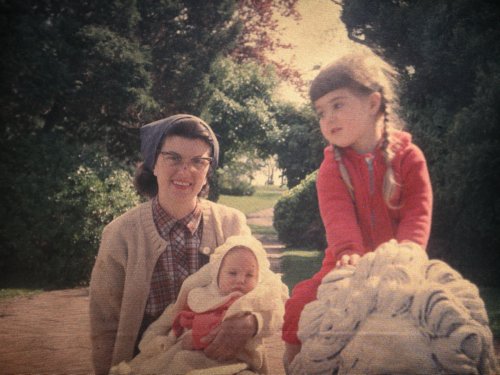
My Mom, baby sister, and me on the lion
1965
about 1997
my daughter and my Dad
2005
my daughter and Hubby
Lynch Park was originally a piece of land known as Woodbury's Point. During the Revolutionary War there was a small fort with guns to protect the town of Beverly. Eventually the land was part of a large seaside estate built by the Evans family, where President Taft summered in 1909 and 1910. Mrs. Evans built the sunken rose garden behind the large mansion that used to stand here. There is a statue here called "The Falconer" inspired by one that was in New York's Central Park, where Mr. Evans saw it out of his hospital window. The estate eventually was given to Beverly as a public park.
My parents met at Lynch Park, playing catch with a ball on the beach in the 1950s. They were engaged at a lighthouse right down the street. I grew up playing there on the lawns, in the rose garden and had swimming lessons on the same beach. My uncle Don was a city gardner for Lynch Park and the rose garden. When I married and lived in New Hampshire I made sure that my daughter and husband knew Lynch Park. We visit often at all seasons of the year. The rose garden and the lions that guard the stairs are still our favorite part of the park.
For the full history of Lynch Park click here http://www.bevrec.com/lynchpark.html#HISTORY
---------------------
Copyright 2011, Heather Wilkinson Rojo
Subscribe to:
Posts (Atom)